
Color-coated steel coils and galvanized steel coils are metal materials widely used in today’s international market. What are the differences between them? And what is the relationship between them? Let’s explore their differences and relationship together.
Key Definitional Differences
Definition of Galvanized Steel Coil
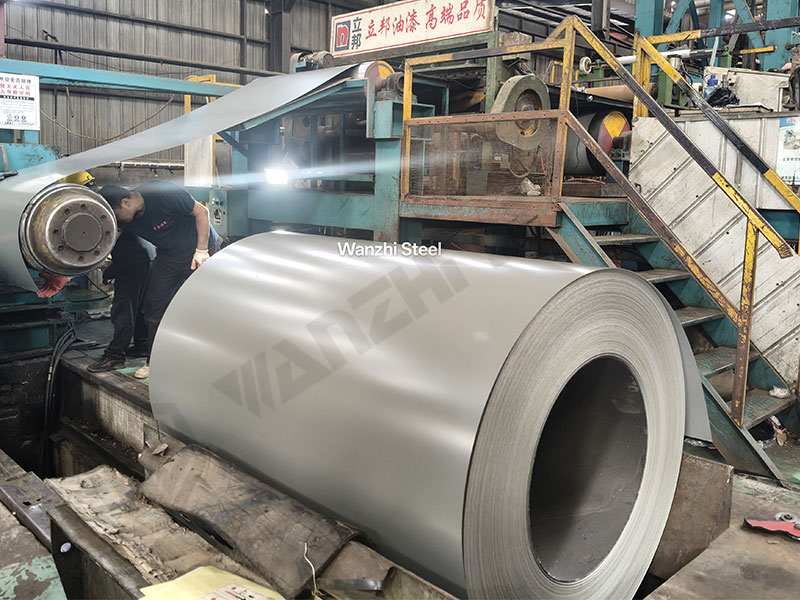
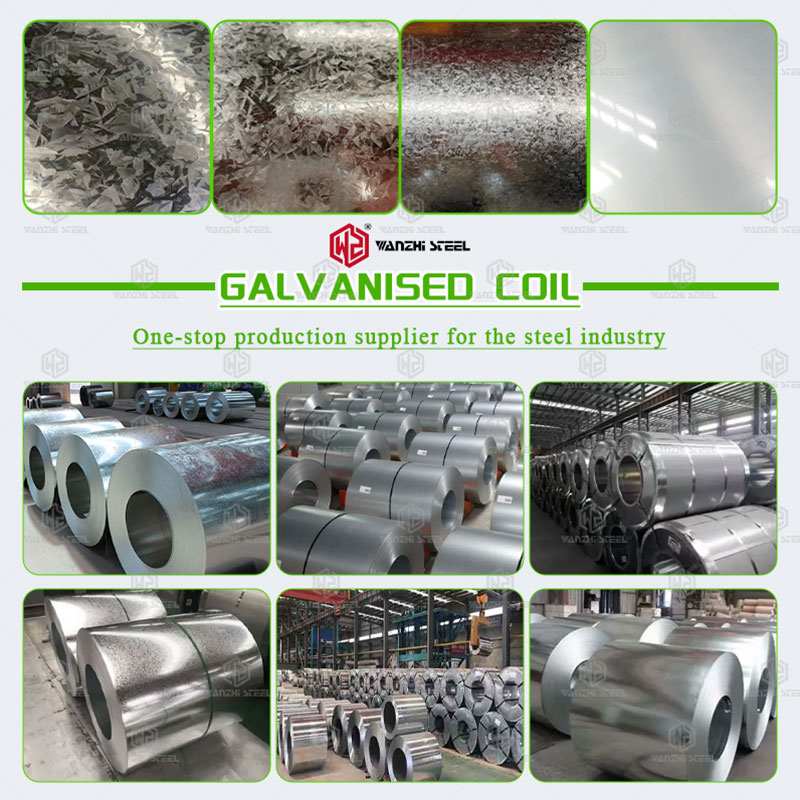
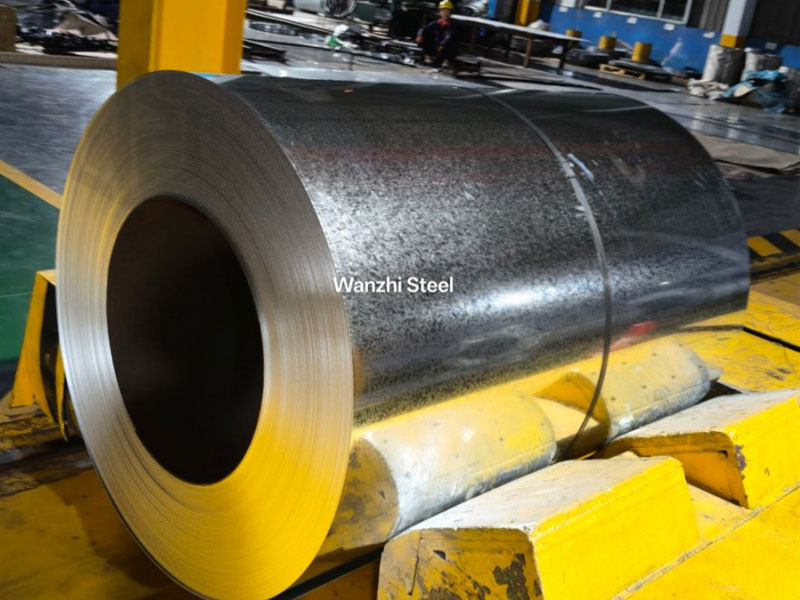
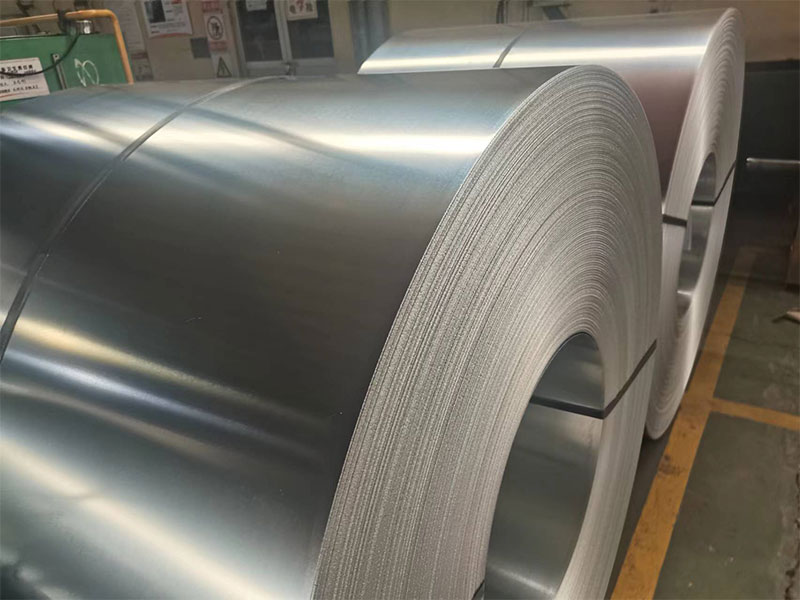
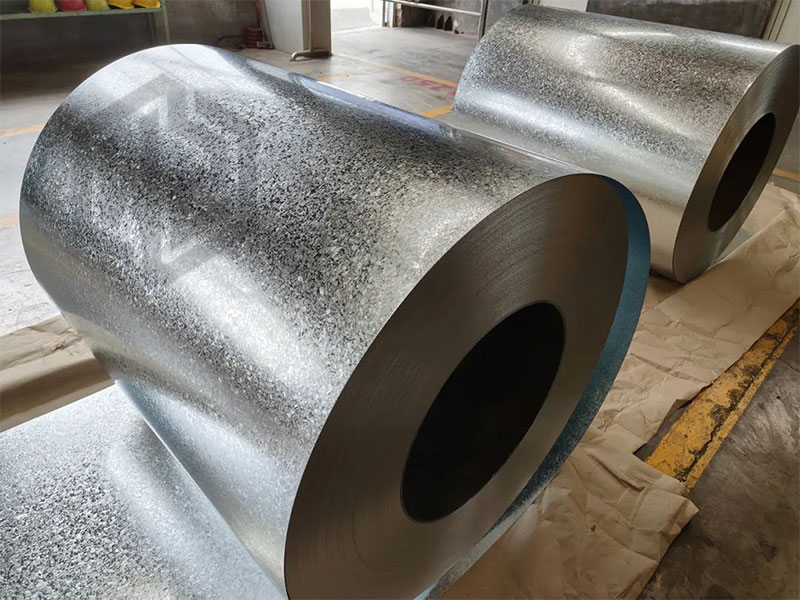
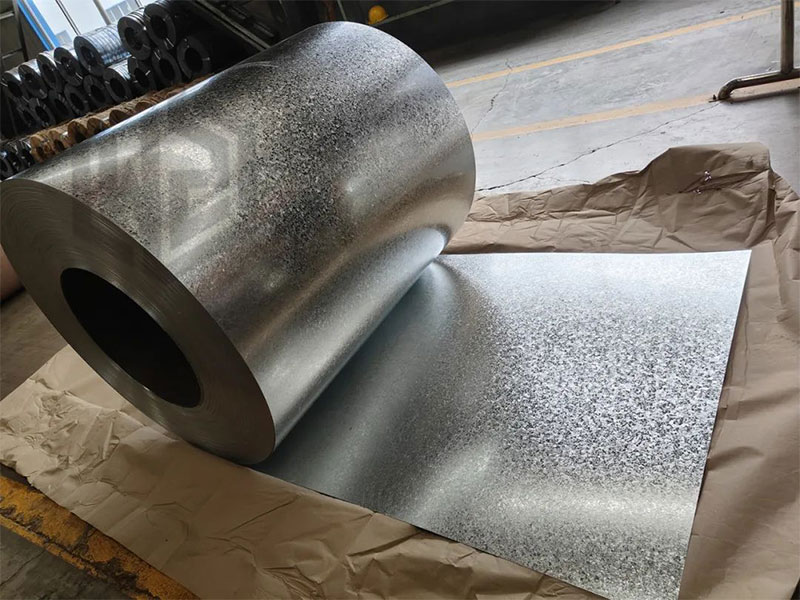
Galvanized steel coil is a product in which cold-rolled steel coil undergoes a hot-dip galvanizing or electrogalvanizing process to form a dense layer of zinc or zinc alloy on its surface.
Galvanized steel coils were developed to address the corrosion susceptibility of cold-rolled steel coils. The pure zinc layer on the surface of the cold-rolled steel substrate acts as a “sacrificial anode” to provide electrochemical protection; even if there is localized damage, the zinc layer will corrode first, thereby protecting the substrate.
Definition of Color-Coated Steel Coils
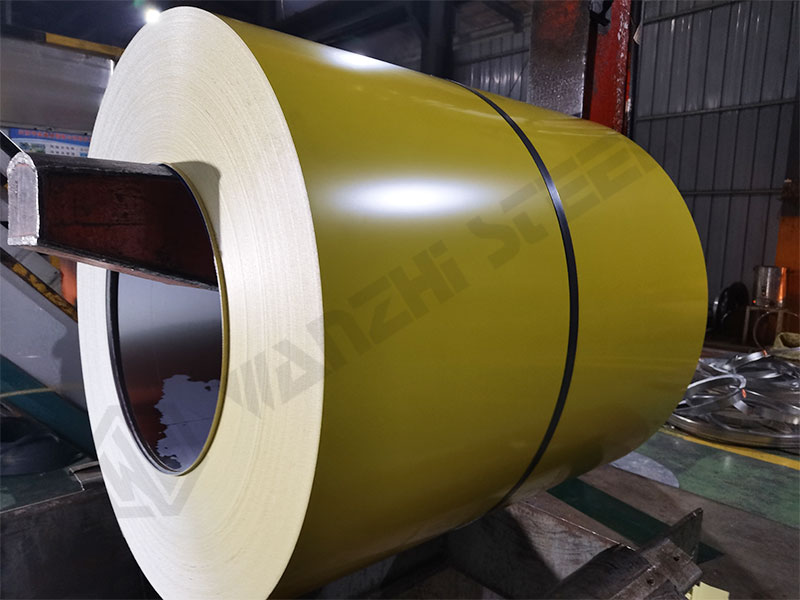
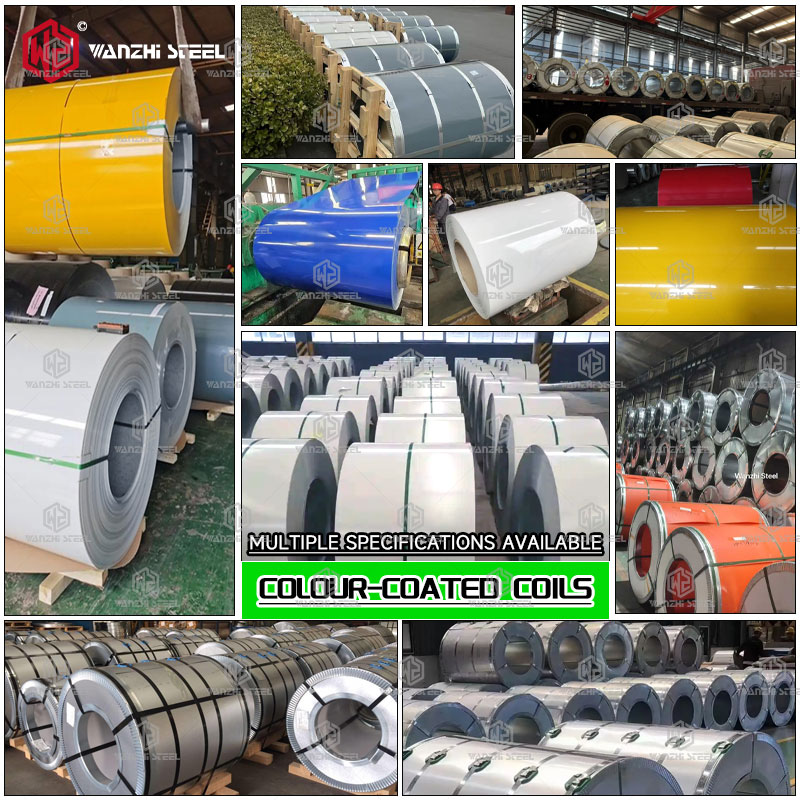
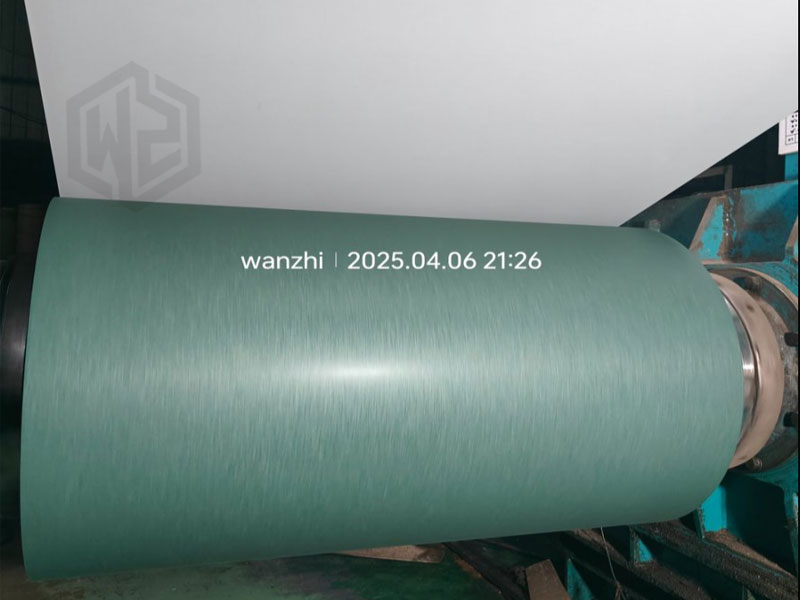
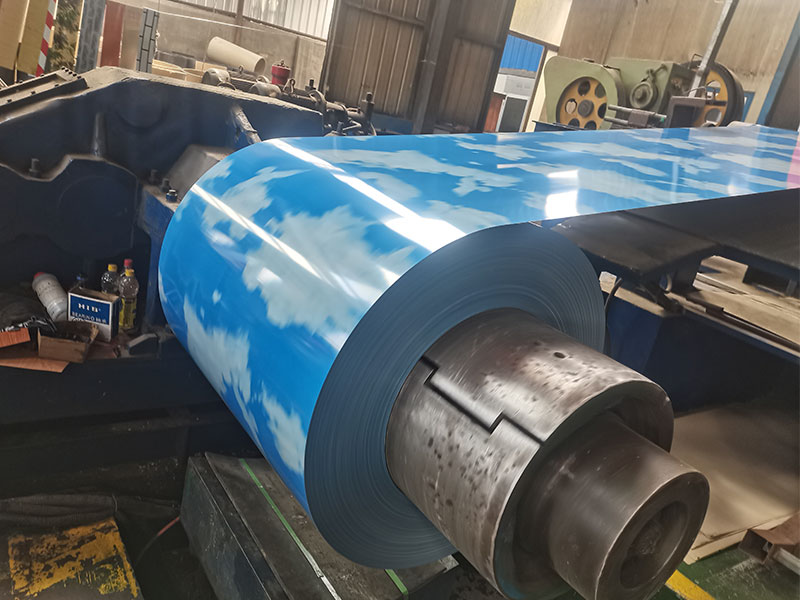
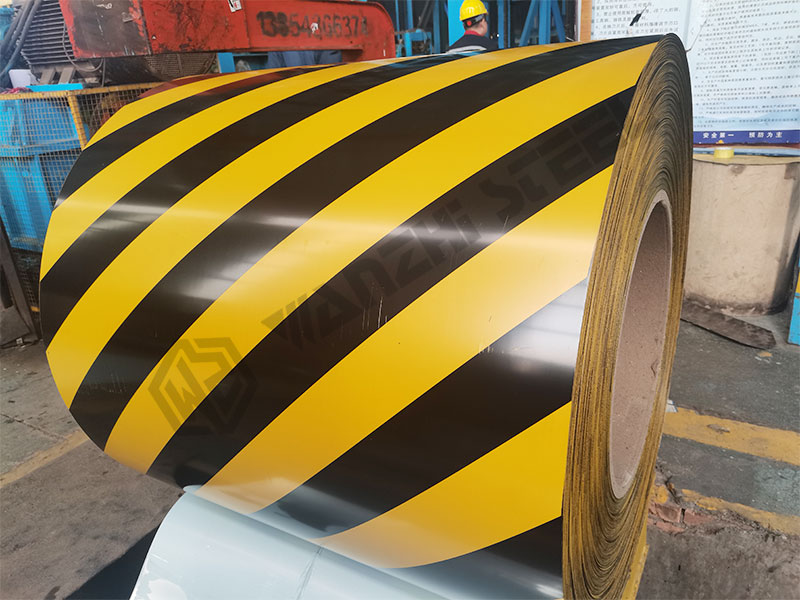
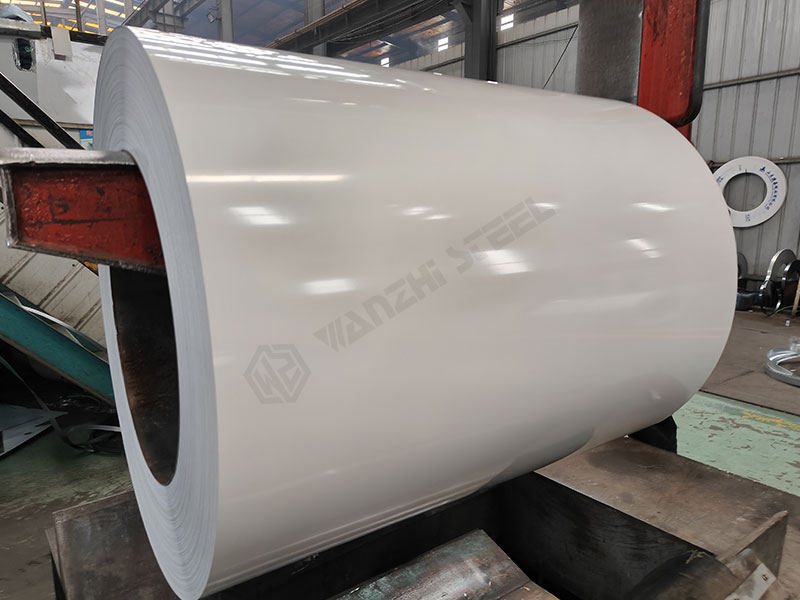
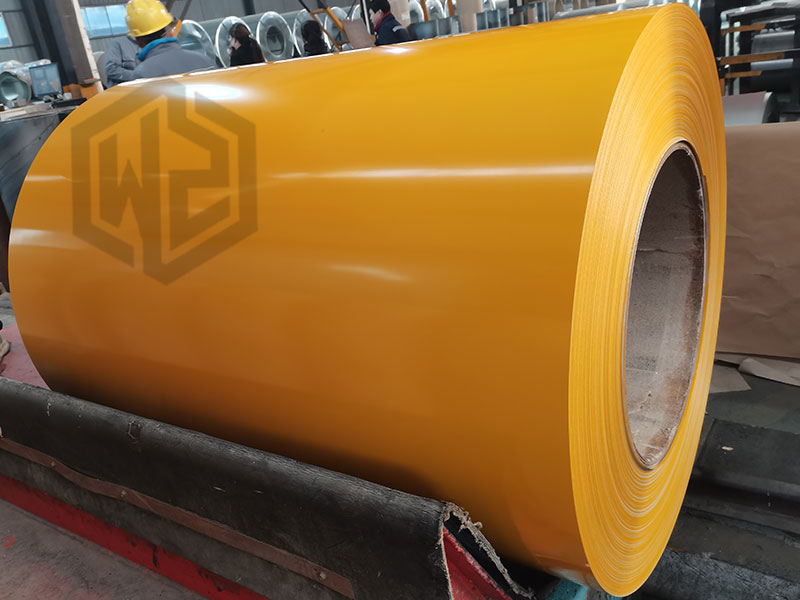
Color-coated steel coil, also known as pre-painted steel coil, is a product manufactured by applying one or more layers of organic coating (such as PE, HDPE, PVDF, etc.) via a roll-coating process onto cold-rolled steel coils, galvanized steel coils (or other coated steel coils) that have already undergone surface treatment, followed by curing through high-temperature baking.
With the exception of color-coated steel coils that use cold-rolled steel coils as the substrate, all other color-coated steel coils feature a decorative layer applied over a corrosion-resistant substrate, offering the combined benefits of “protection and decoration” in a single product.
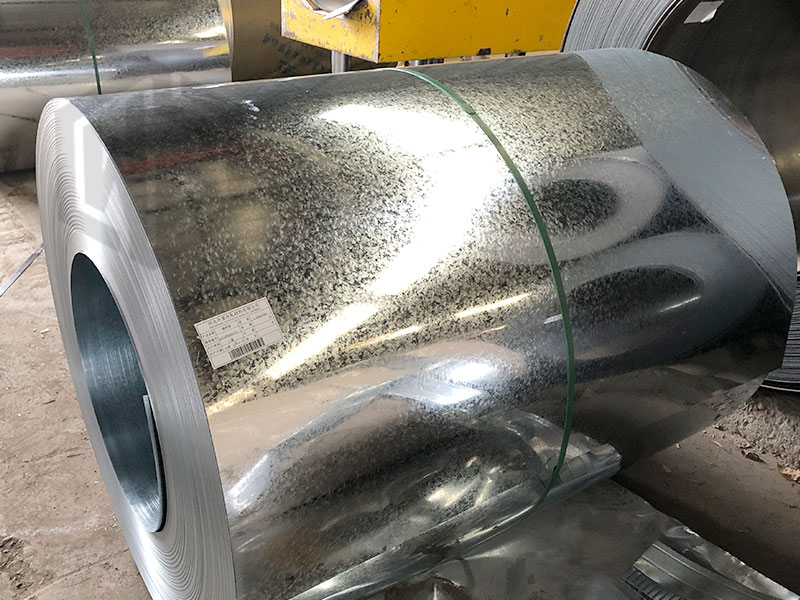
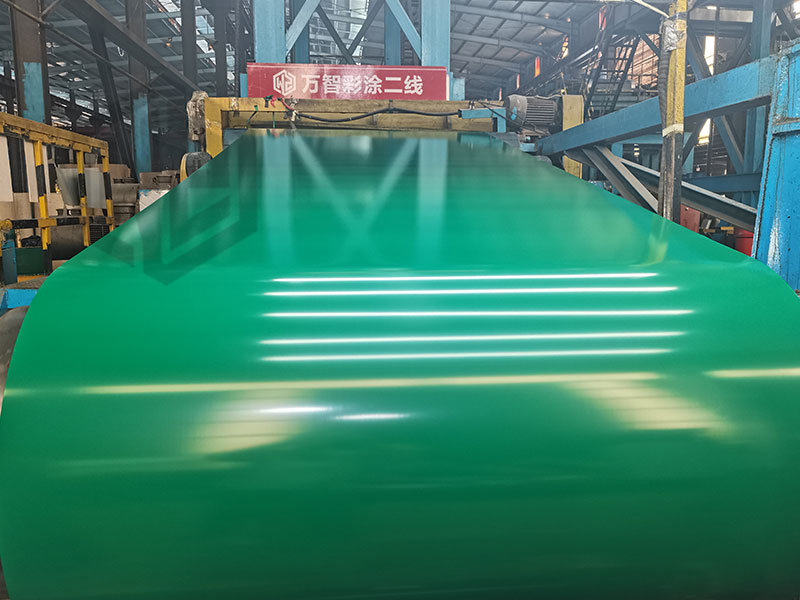
Differences in Manufacturing Processes and Structures
Manufacturing Process of Galvanized Steel Coils
Annealed cold-rolled steel coils are continuously passed at high speed through a high-temperature molten zinc bath. The coating thickness is controlled by an air knife, forming a structure composed of an alloy layer, an intermediate layer, and a pure zinc layer. Intermetallic compounds form between the galvanized layer and the steel substrate, resulting in extremely high bond strength. The thicker the zinc layer, the greater the corrosion resistance; we offer galvanized layers ranging from Z30 to Z275 g/m².
Manufacturing Process of Color-Coated Steel Coils
The substrate first undergoes degreasing and chemical passivation to form a conversion coating that enhances adhesion. Subsequently, a primer and topcoat are applied to the front side, while a backcoat is applied to the reverse side to balance stress and enhance overall protection. The coating bonds to the substrate through a combination of physical and chemical mechanisms. The entire process involves multiple stages, including pretreatment, coating, baking, and curing, making it significantly more complex than the production of galvanized steel coils.
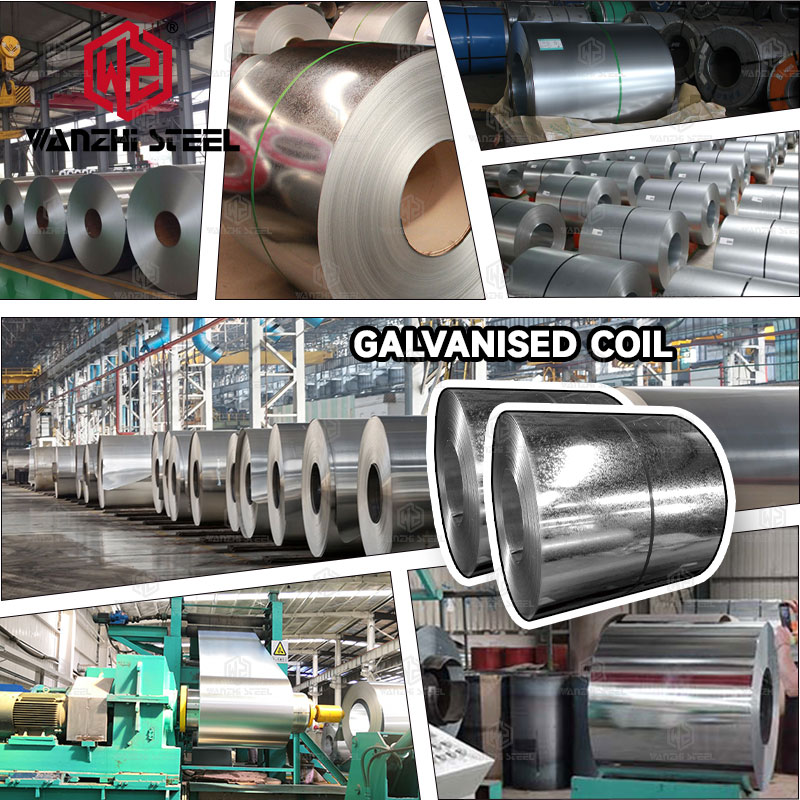
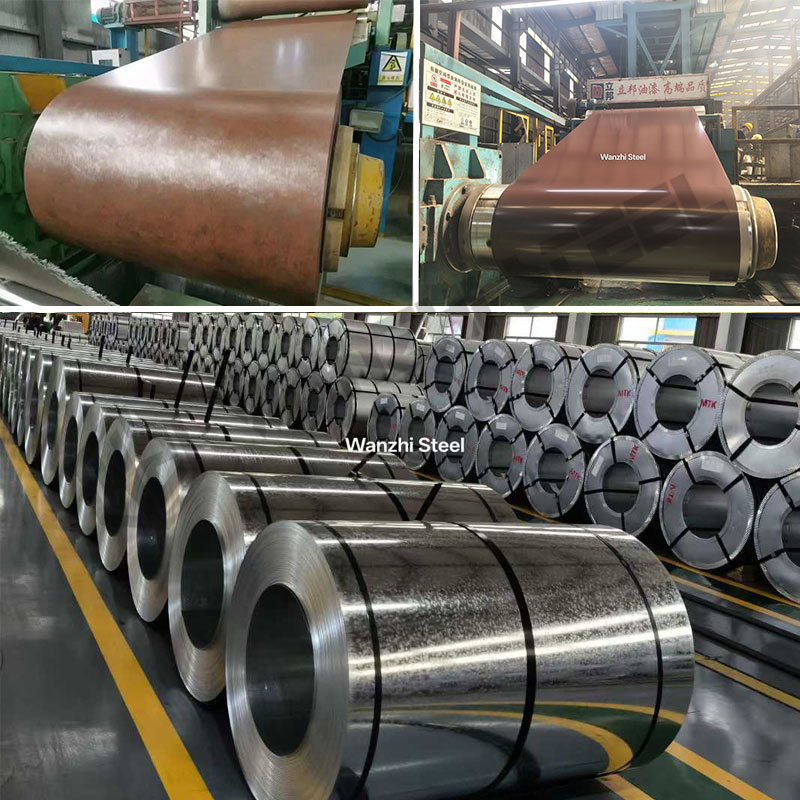
Structural Comparison
- Galvanized Steel Coils: Steel substrate + zinc or zinc-aluminum alloy coating (single-layer metal coating)
- Prepainted Steel Coils: Steel substrate + zinc/zinc-aluminum coating + chemical conversion coating + primer + topcoat + backcoat (multi-layer composite structure)
Varieties of Galvanized Steel Substrates
As the substrate for color-coated steel coils, galvanized steel coils are classified in various ways, including surface morphology, zinc coating thickness, and production processes.
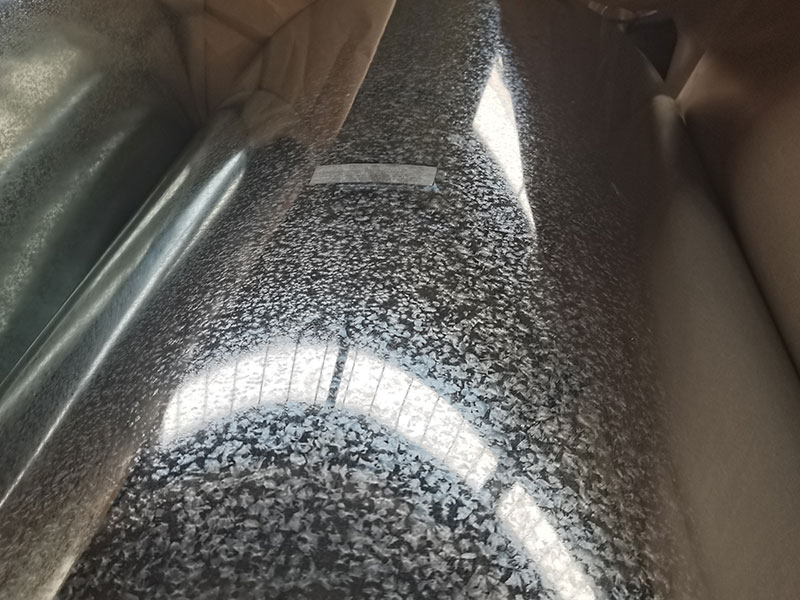
- Classification by Surface Appearance: Coarse-flake galvanized steel coils, standard-flake galvanized steel coils, fine-flake galvanized steel coils, and zero-flake galvanized steel coils.
- Classification by Zinc Coating Thickness: Common specifications include 80g, 100g, 120g, 180 g, and 275 g (unit: g/m², total for both sides). The zinc coating thickness directly determines the substrate’s corrosion resistance lifespan.
- Classification by production process: Common types include hot-dip galvanized steel coils and electrogalvanized steel coils; the former is produced using a continuous galvanizing process, while the latter uses an electrogalvanizing process.
Comparison of Performance Characteristics
| Item | Galvanized Steel Coils | Color-coated Steel Coils |
| Appearance | They have a single color, exhibiting the silvery-white metallic luster of the zinc coating itself. Upon exposure to natural environments, the zinc coating gradually oxidizes, forming a white rust or a dull grayish-brown basic zinc carbonate film, resulting in significant appearance deterioration over time. | A rich variety of colors are available, with customizable effects including high gloss, matte, embossed, and wood grain. The surface coating is robust and durable. It offers irreplaceable advantages in architectural aesthetics and visual durability, maintaining color stability over a long period. |
| Corrosion Resistance Mechanism | The zinc coating acts as a sacrificial anode, preferentially corroding to provide cathodic protection for the steel substrate. Cut edges exhibit a tendency to self-heal (zinc migration coverage). | The paint coating provides a physical barrier, preventing the penetration of water, oxygen, and ions; the zinc plating layer acts as a second line of defense, providing electrochemical protection at cuts and scratches. |
| Processing Performance | Because the coating and substrate are metallurgically bonded, it possesses good ductility, making it suitable for complex forming processes such as deep drawing, bending, and die forming. The galvanized coating is not easily peeled off. | While the coating has some elasticity, it is prone to cracking and peeling under severe stamping or deep drawing. Therefore, it is typically used for low to medium deformation processes such as bending and roll forming. |
| Service Life | Under bare-use conditions, its lifespan in ordinary atmospheric environments is approximately 15-20 years, which is significantly shortened in industrial pollution or marine climates. | Depending on the coating system, ordinary polyester coatings have a lifespan of approximately +7-10 years, while fluorocarbon coatings can last 25-30+ years, maintaining a good appearance throughout their entire lifespan. |
Cost Differences
The price of color-coated steel coils is typically higher than that of galvanized steel coils. This difference primarily stems from the complexity of the production process:
Cost Structure of Color-Coated Steel Coils
- The production process is complex, involving multiple stages such as pretreatment, coating, baking, and curing, each of which requires precise process control.
- The coating materials themselves are relatively expensive, particularly high-performance coatings such as fluorocarbon and silicone-modified polyester.
- The cost of the substrate already includes the investment in galvanizing or galvanized-aluminum coating.
Cost Structure of Galvanized Steel Coils
- The production process is relatively simple, with the core step being the immersion of steel in molten zinc for hot-dip galvanizing.
- The cost of the zinc coating material is relatively controllable.
- No additional coating processes are required.
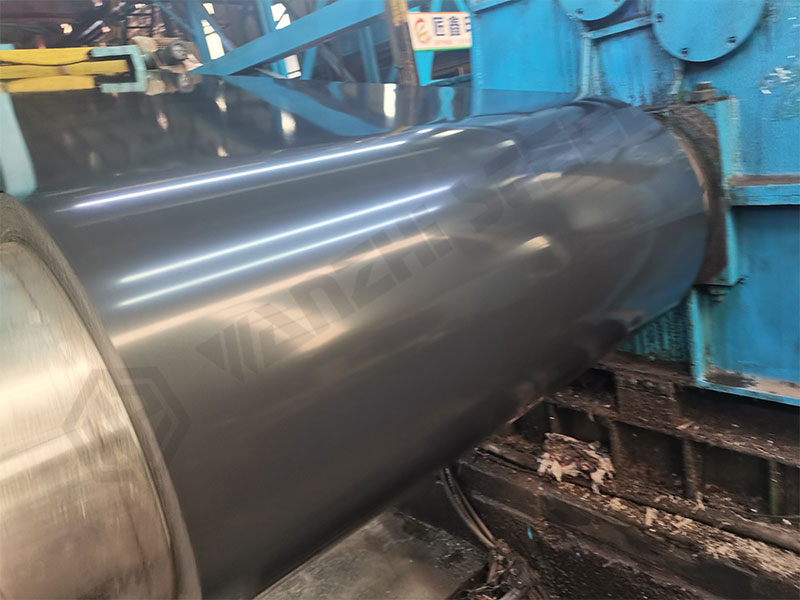

It should be noted that specific prices are also influenced by factors such as market supply and demand, brand, specifications, zinc coating thickness, coating type, and region. During actual procurement, a comprehensive comparison and selection should be made based on the specific application environment, decorative requirements, and service life expectations. You may also contact us to confirm accurate pricing information.
Differentiation and Complementarity of Application Scenarios
Typical Applications of Galvanized Steel Coils
- As an intermediate product: Supplied in large quantities to color-coated steel manufacturers as a substrate.
- Applications requiring corrosion resistance but with no strict aesthetic requirements: ventilation ducts, cable trays, solar panel mounts, agricultural greenhouse frames, automotive interior structural components, electrical distribution box enclosures (non-visible surfaces), building structural components, piping, etc.
- Sectors requiring deep processing: Used for stamping into complex shapes followed by overall coating; in these cases, galvanized steel is used instead of pre-painted steel to prevent coating damage during processing.
Typical Applications of Pre-painted Steel Coils
- Building Envelope Systems: Roofs and walls of large industrial plants, airports, high-speed rail stations, and sports venues, where long-term color consistency, resistance to weathering, and no need for subsequent maintenance painting are required.
- Home Appliances and Electrical Equipment: Side panels for refrigerators, washing machine housings, outdoor units for air conditioners, microwave oven interiors, and rice cooker housings. The coating provides direct decorative appeal, eliminating the need for manufacturers to apply additional paint.
- Interior Decoration and Office Equipment: Ceilings, partitions, office furniture, filing cabinets, and shelving.
- Automotive Manufacturing and Transportation: Certain interior components, body panels, and vehicle compartment panels.
- Temporary and Lightweight Structures: Portable buildings, equipment room retrofits, and construction fencing.
Complementary Relationship Between the Two
In the same construction project, the two are often used in conjunction. For example, in steel-frame buildings, high-weatherability color-coated steel coils are used for exterior roof panels, while galvanized steel coils are used for interior roof panels and purlins; in ventilation duct systems, color-coated steel coils are used for exposed sections to blend with the interior design, while galvanized steel coils are used for concealed sections to control costs.
Wanzhi Group is a professional manufacturer of galvanized steel coils and color-coated steel coils, with a factory located in Binzhou, Shandong Province. If you have any purchasing needs, please feel free to contact us or visit our factory at any time.