
PPGI Roofing Sheet is widely used in residential, commercial, industrial, and agricultural buildings due to their exceptional durability, aesthetic appeal, and practicality. Designed to withstand various environmental loads such as wind, snow, and rain, these roofing panels also resist corrosion and provide long-term protection.
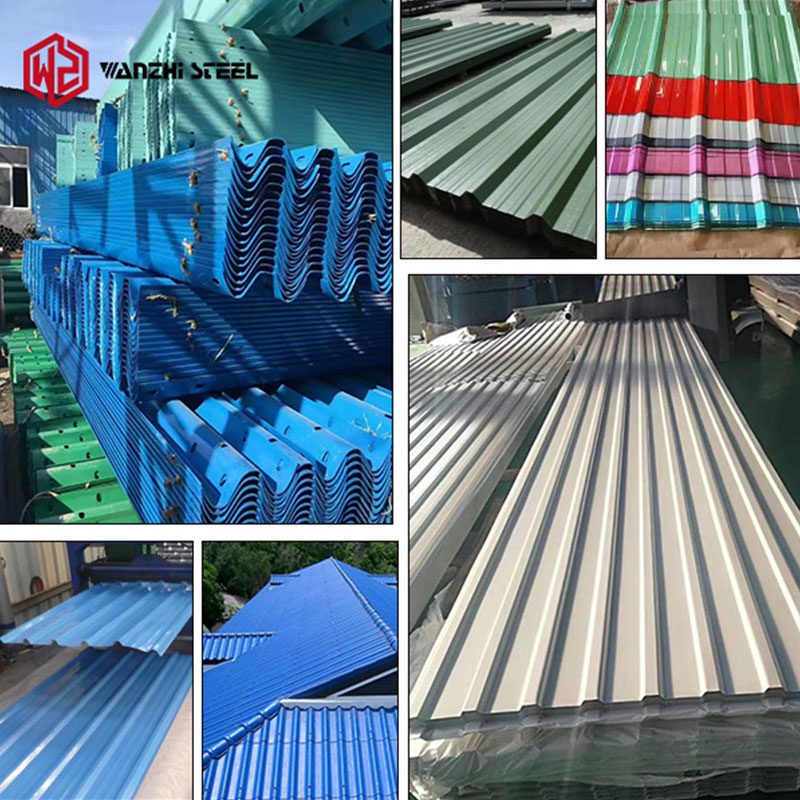
PPGI Roofing Sheet Structural Design
PPGI roofing sheet is designed to meet architectural requirements for drainage, natural daylighting, aesthetics, structural strength, and ventilation.
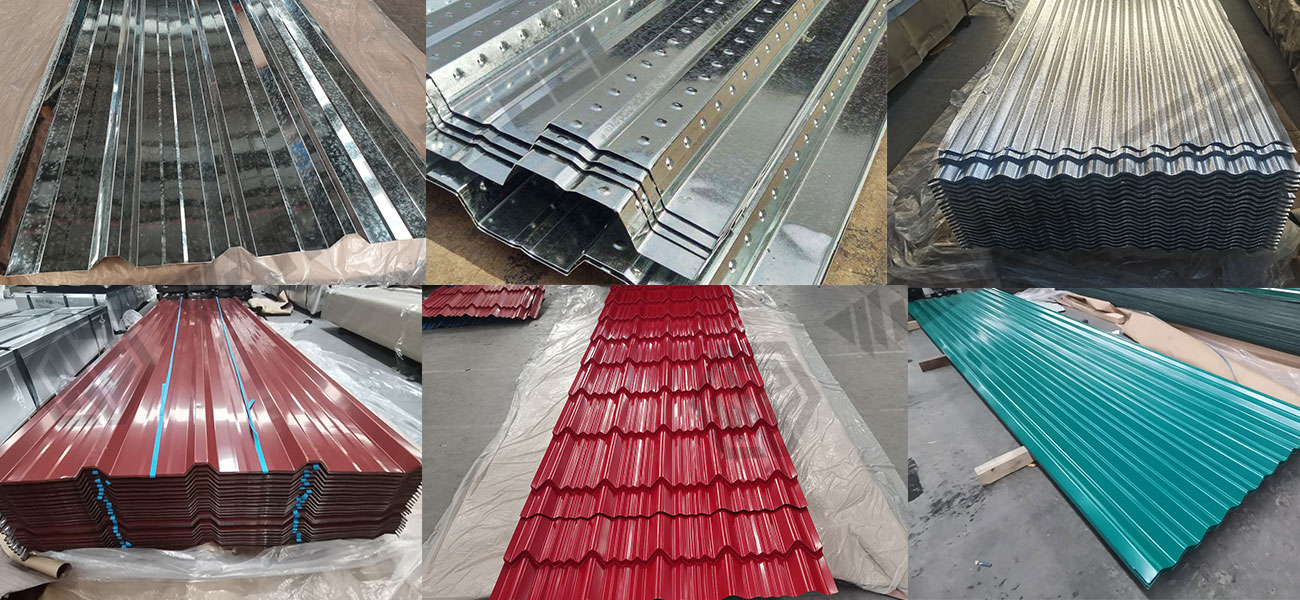
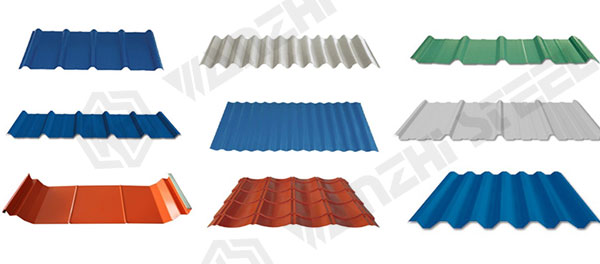
Common PPGI Roof Panel Types
- PPGI Corrugated Sheet: Classic wavy profile, easy to manufacture and highly adaptable.
- PPGI Trapezoidal sheet: Widely used in modern industrial buildings, offering exceptional rigidity and load distribution.
- PPGI Tile-Effect Sheet: Combines the aesthetics of traditional roofing with the strength and lightness of metal.
Core Advantages
- Exceptional Corrosion Resistance & Durability: Galvanized substrate (GI) + multi-layer coating (Polyester PE, Silicone Modified Polyester SMP, High Durability Polyester HDP, PVDF, etc.) forms a robust barrier, providing 8-25 years of corrosion resistance.
- Aesthetic Versatility: Wanzhi Group offers hundreds of color options with surface finishes including matte, gloss, textures (e.g., wood grain, stone), and prints (natural landscapes, cultural motifs), delivering exceptional decorative effects.
- Lightweight & High Strength: Compared to traditional concrete or clay tiles, PPGI panels are remarkably lightweight, reducing structural loads. Their corrugated design minimizes self-weight while achieving outstanding load-bearing capacity.
- Easy Installation: Pre-fabricated at the factory, panels can be installed rapidly on-site, shortening construction cycles and significantly reducing labor costs. The painted galvanized steel material ensures minimal long-term maintenance expenses.
- Superior Performance: Provides drainage and wind resistance. When combined with insulation layers like glass wool or rock wool, it delivers thermal insulation and soundproofing capabilities.
Applications
- Industrial plants and workshops
- Logistics centers and warehouses
- Agricultural buildings (e.g., greenhouses, barns)
- Public structures (stadiums, stations, shopping malls, hospitals)
- Temporary and emergency shelters
- Container housing
Why Choose Wanzhi PPGI Roofing Panels?
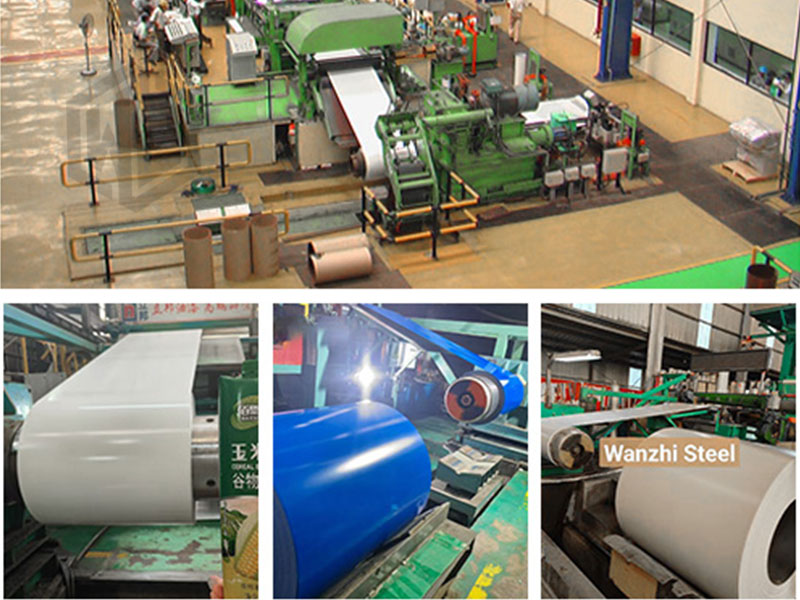
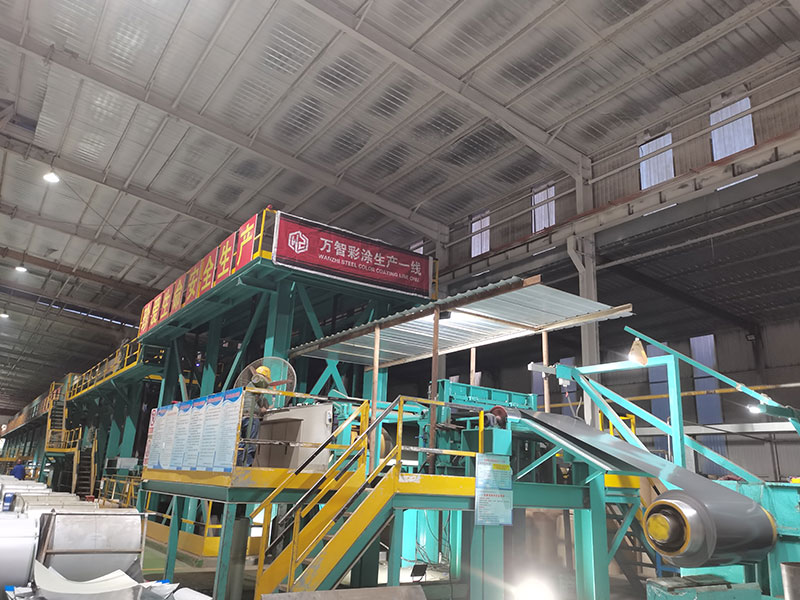
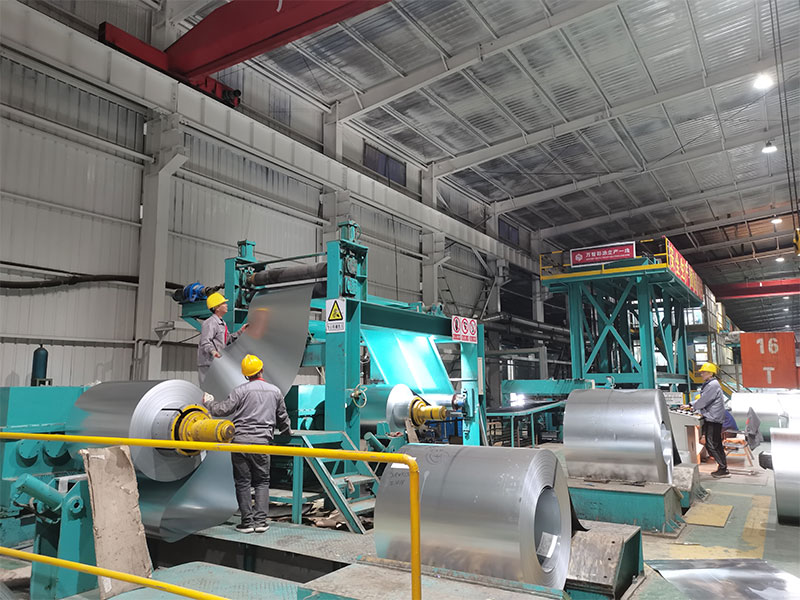
Wanzhi Group manufactures high-quality PPGI Roofing Sheet and PPGL Roofing Sheet, offering exceptional corrosion resistance, formability, and color retention. Our advanced production lines—including galvanizing, coating, and roll forming equipment—achieve an annual capacity of 600,000 tons. Certified under ISO9001 and ISO14001, our products guarantee consistent quality and environmental responsibility.
PPGI Roofing OEM ODM
Wanzhi Group maintain a complete industrial chain from galvanizing and color coating to precision roll forming. This integrated production model allows us to strictly control every step from raw materials to finished products, ensuring stable and consistent quality. Additionally, we offer flexible OEM and ODM services, customizing colors, dimensions, sheet profiles, coatings, and more according to your design requirements to create unique roofing solutions.
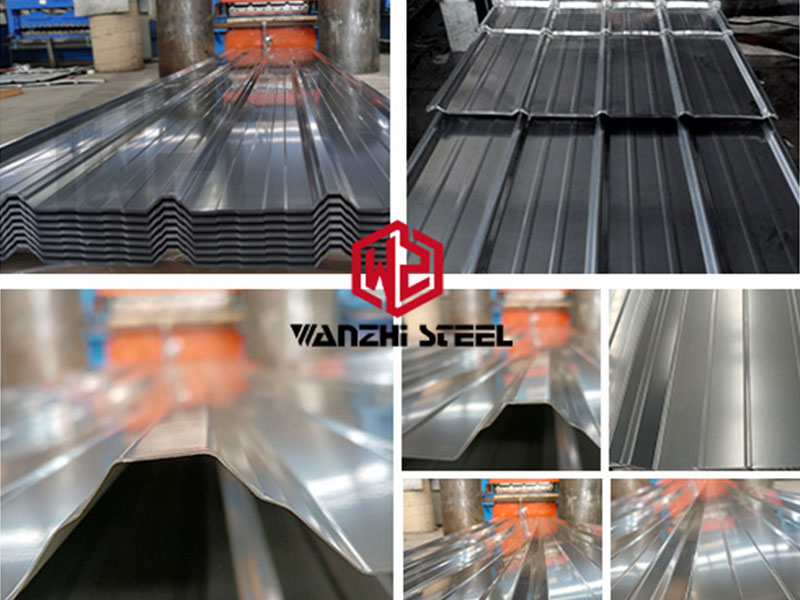
Case
With modern production lines boasting an annual capacity of 600,000 tons, our products are widely used in industrial plants, logistics warehouses, commercial centers, and public buildings worldwide. These successful projects stand as the strongest testament to our products’ performance and reliability.
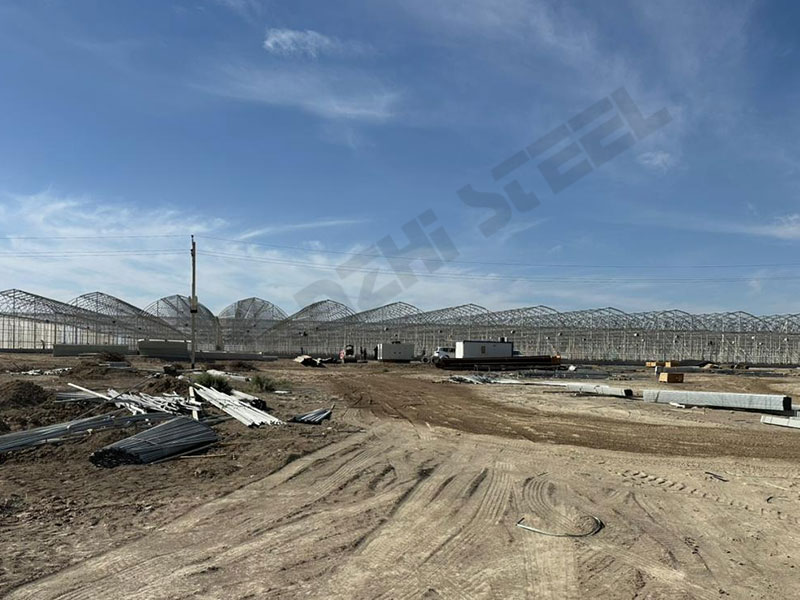
Wanzhi Steel – Agricultural Greenhouse Project in Turkmenistan
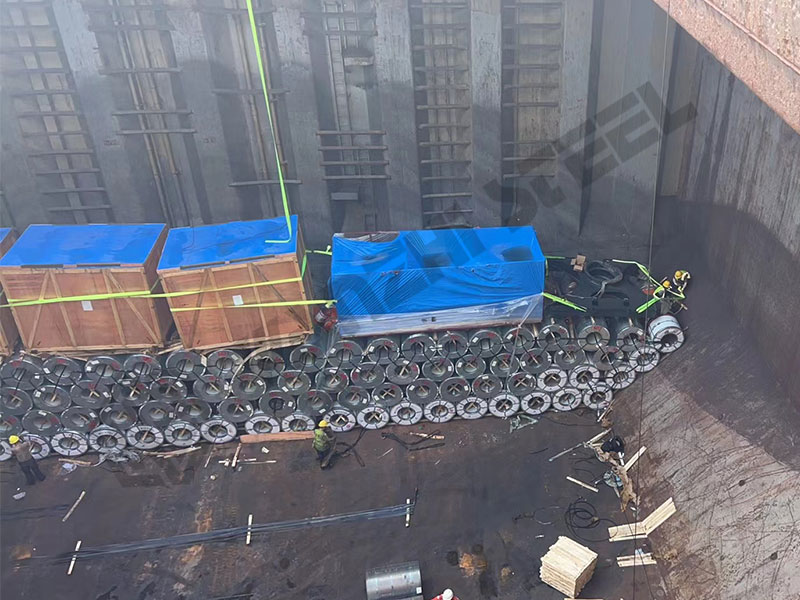
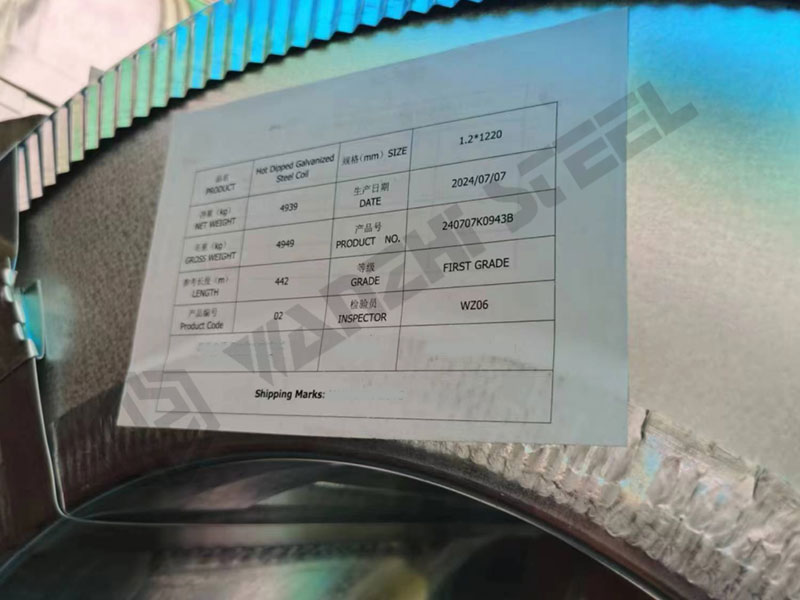
550 tons PPGI Steel Coil to Azerbaijan
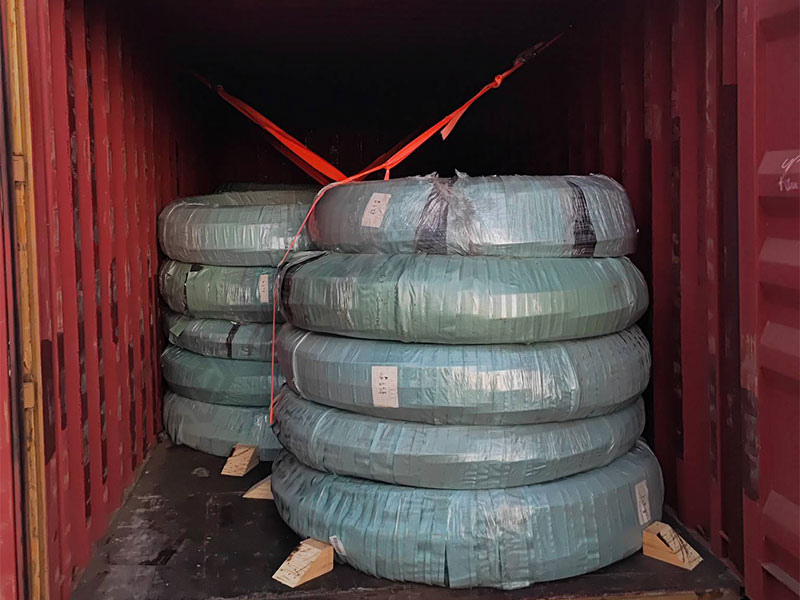
100 tons of Galvanized Coils to Saudi Arabia
144 ton Steel Wire to Spanish
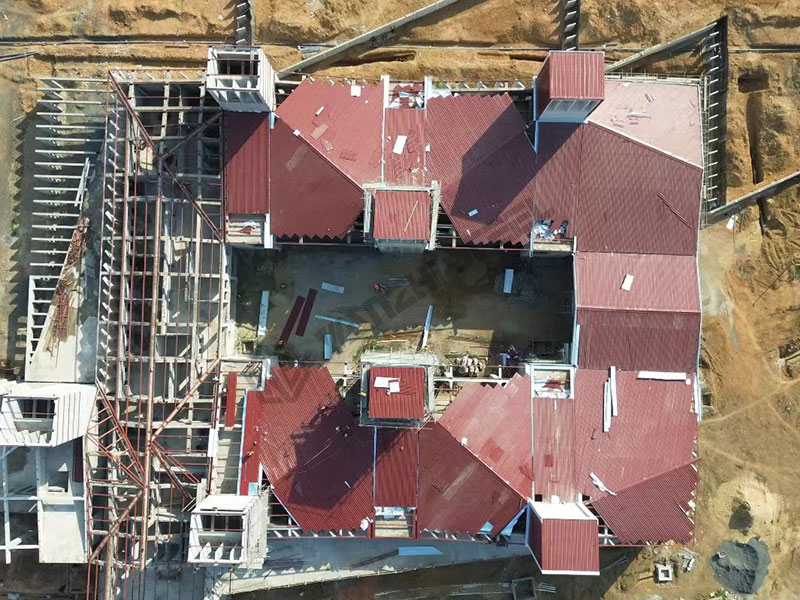
Project of PPGI Roofing en Libya
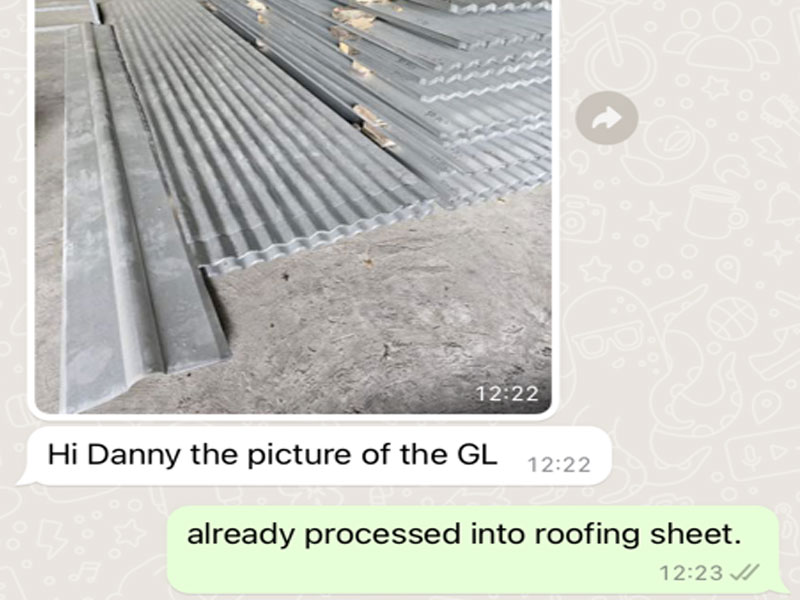
100 tons of GL and PPGL in Solomon Islands
Certifications
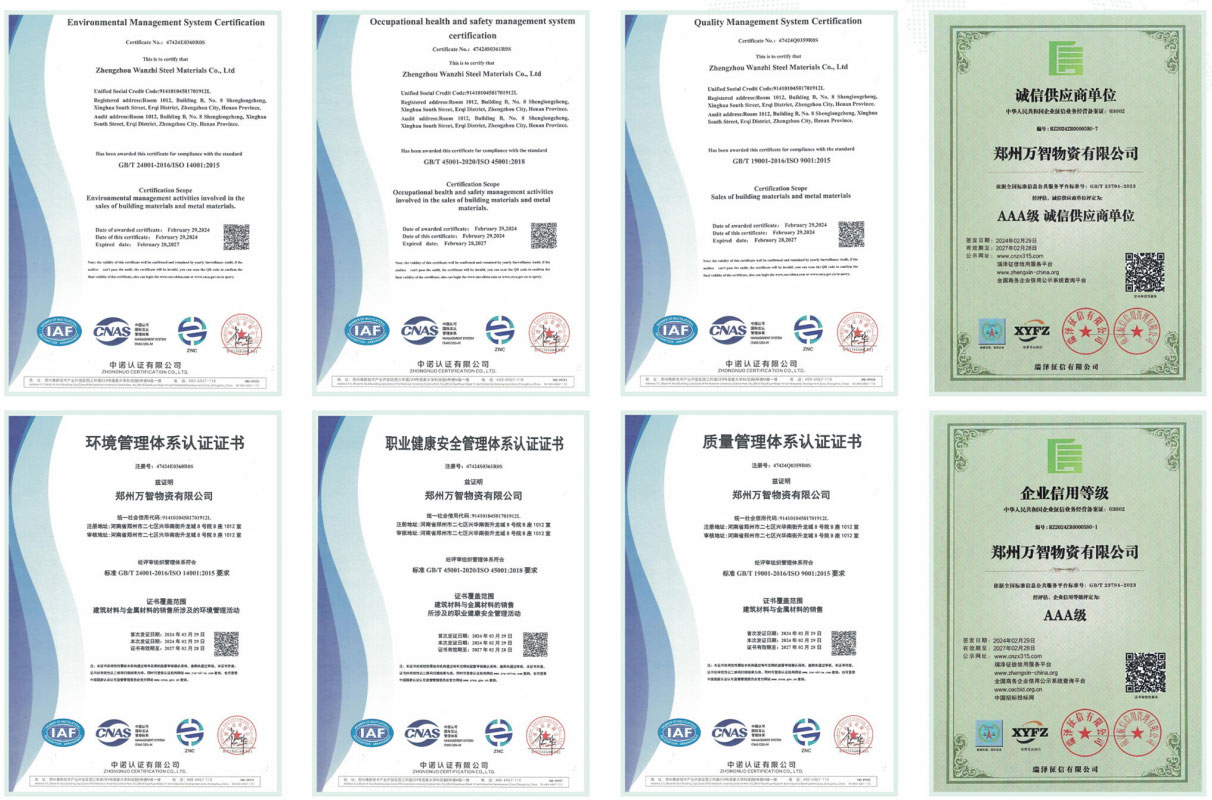
Every coil and sheet undergoes rigorous testing, and we provide complete Material Test Certificates (MTC) to ensure full compliance with international standards and technical specifications.
PPGI Roofing Panels vs. PPGI Wall Panels
In construction, PPGI steel primarily serves as roofing and wall panels. PPGI roofing sheet feature enhanced structural integrity with higher, steeper wave peaks during forming. PPGI wall panels emphasize aesthetics with lower wave heights, shallower ribs, and gentler profiles. Consequently, PPGI wall panels are not suitable for roofing applications.
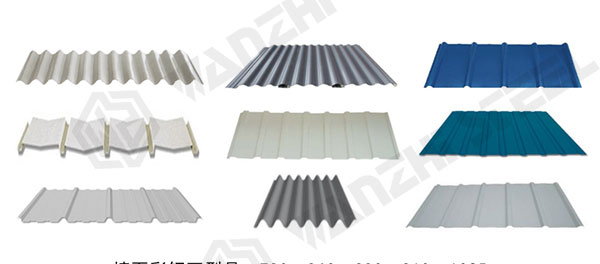
| Property | PPGI Roofing Sheet | PPGI Wall Cladding Sheet |
| Function | Waterproof, drainage, load-bearing, and other protective functions. | Building enclosure, heat insulation, wind resistance, and facade decoration. |
| Wave Height | Higher | Lower |
| Board Type | High corrugated, high trapezoidal boards. | Low corrugated, low trapezoidal boards, comb boards, corrugated boards. |
| Load-Bearing | Very high. | Relatively lower. |
| Waterproof & Drainage | Requires high drainage capacity. | Serves to guide water flow. |
| Aesthetic Value | Focuses more on functionality and overall color effect. | Very important. |
| Insulation Design | Often used with insulation cotton to form a “roof system.” | Commonly used with an insulation layer to form a “wall system.” |
| Coating | SMP (Silicon Modified Polyester), HDP (High Durability Polyester), or PVDF. | PE, SMP, HDP, PVDF available. |
How to Select Premium PPGI Roofing Sheet?
Roofing sheet solutions must match the application environment. For example:
– In regions with heavy snow and wind: Choose PPGI sheet with higher ribs, thicker substrate, and higher coating grades.
– In areas prone to severe typhoons: Require specialized design, adding more fastening points or using wind-resistant clips.
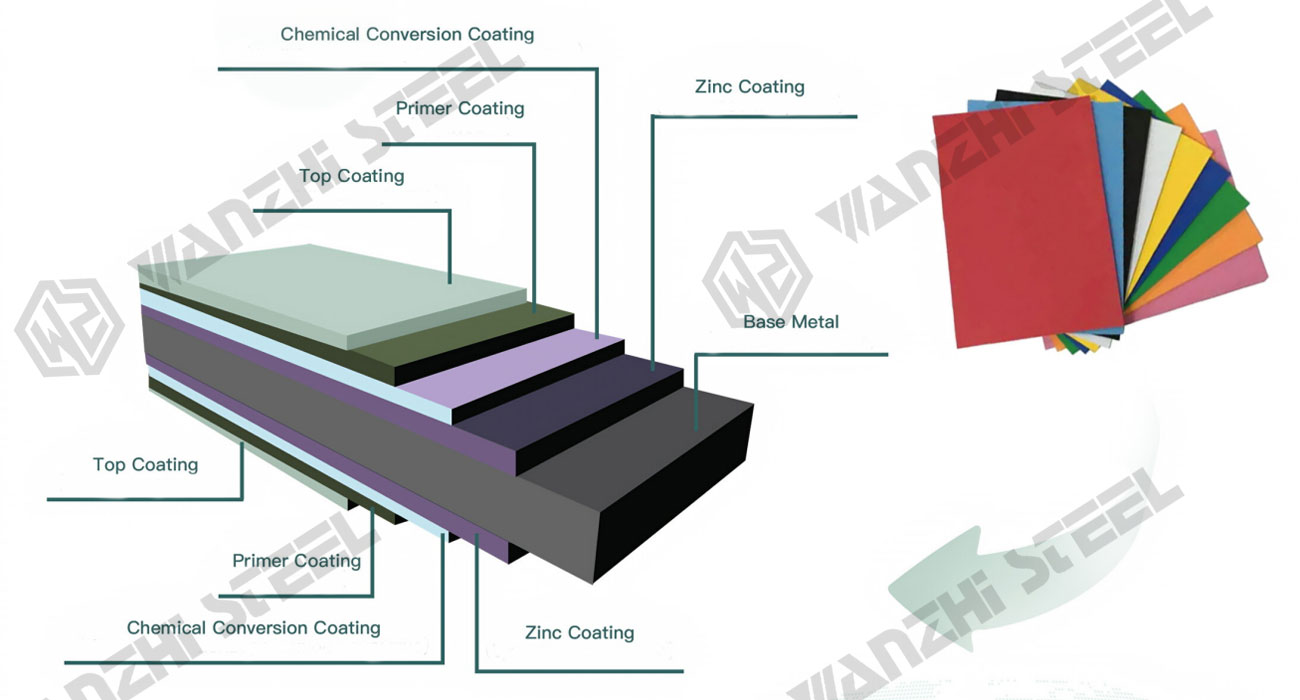
- Coating Systems: Select based on environmental conditions. PVDF coatings offer superior UV resistance and corrosion protection, while HDP and SMP coatings provide excellent durability at lower costs.
- Base Material Thickness: Select based on purlin spacing and load requirements. Thicker sheets provide greater load-bearing capacity.
- Corrugation Height: Choose according to stiffness and drainage performance needs. Higher corrugations enhance drainage and structural strength.
- Surface Quality: The paint film should be uniform, smooth, and free of color variation, with no visible defects such as scratches, bubbles, or zinc particles.
- Quality Assurance: Request third-party test reports and inspect samples for coating adhesion, color consistency, and edge quality.
Maintenance and Care for PPGI Roofing Sheets
- Regular Cleaning: Clean the PPGI roofing sheet surface periodically to remove dust, dirt, and other contaminants, maintaining its appearance and corrosion resistance. Use a soft cloth or sponge dampened with clean water or a neutral detergent for wiping.
- Inspection and Repair: Periodically inspect roofing sheets for damage or corrosion. Repair or replace promptly as needed. Use paint matching the original material for touch-ups to ensure consistent results with the overall finish.
- Avoid Heavy Loads: During use, prevent heavy objects from pressing on roofing sheets to avoid deformation or damage. Additionally, prevent sharp objects from scratching the panel surface.
PPGI roofing sheet offer reliable and aesthetically pleasing roofing solutions for diverse buildings, combining versatility, durability, rich color options, and cost-effective installation.