
Galvanized steel coil is widely used in construction, manufacturing, and industrial applications for its corrosion resistance and durability. Choosing the right GI coil requires careful consideration of the steel grade, thickness, width, zinc coating, surface finish, and intended application. This guide explains the key factors to help you select the right galvanized steel coil for your project.
What Is Galvanized Steel Coil?
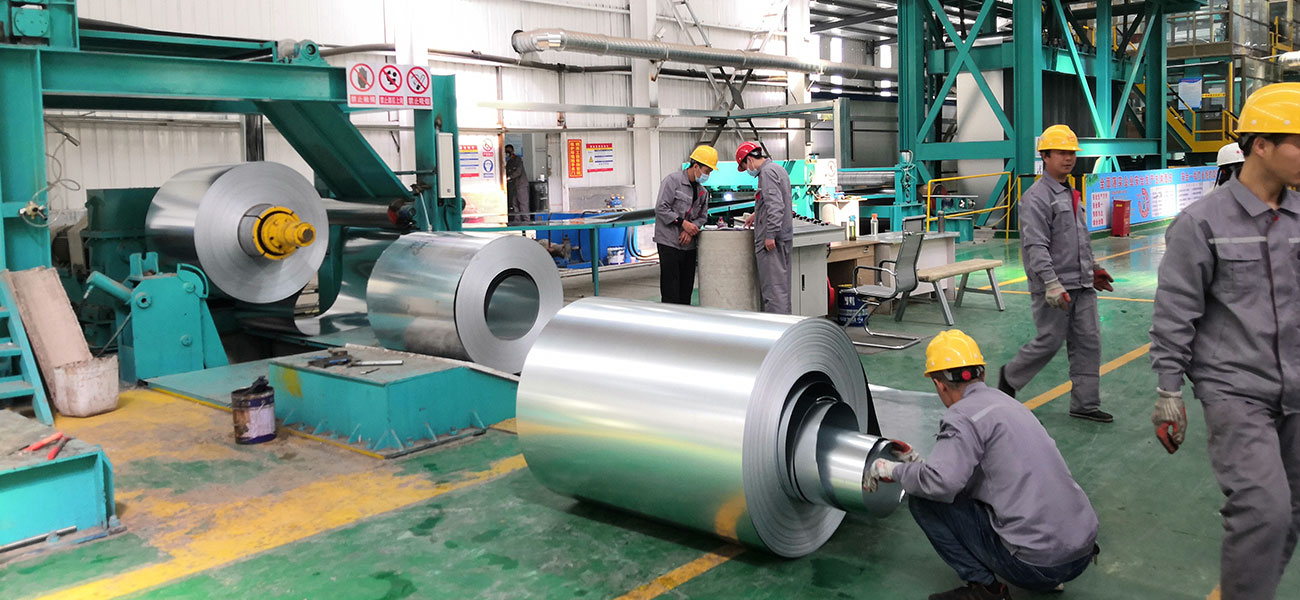
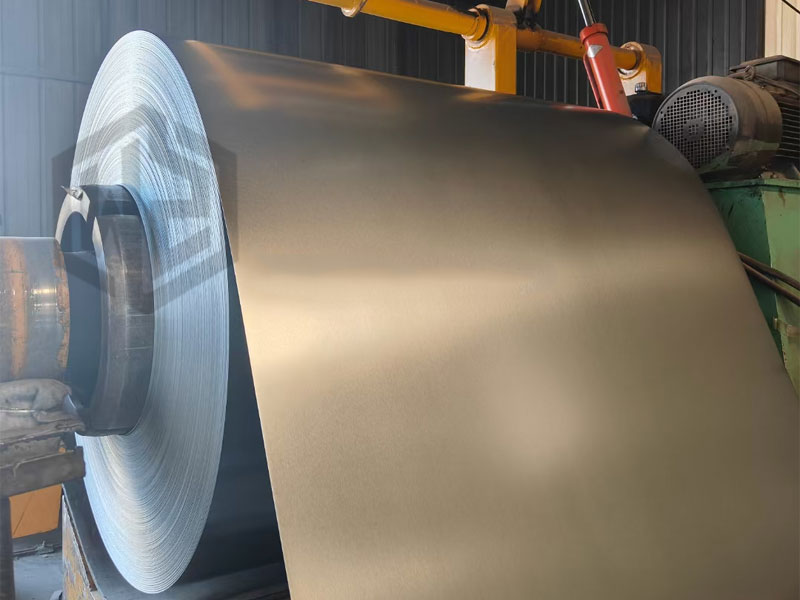
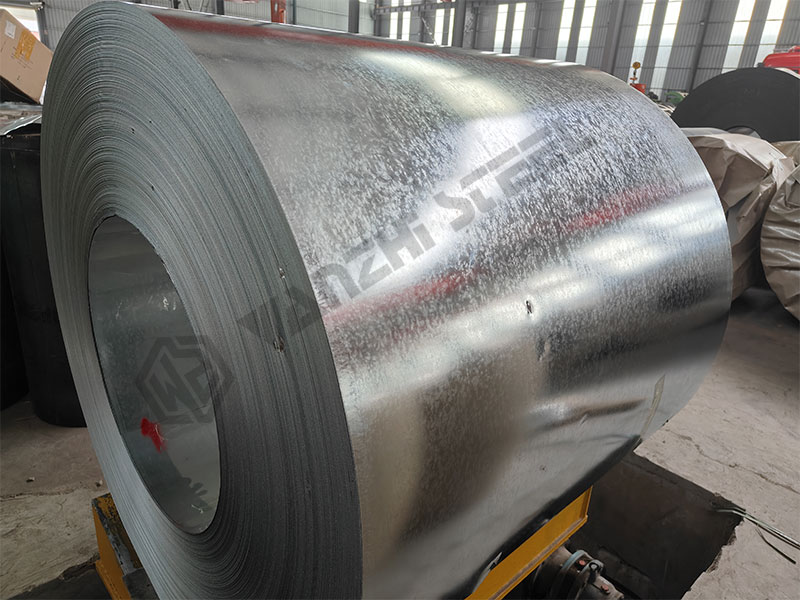
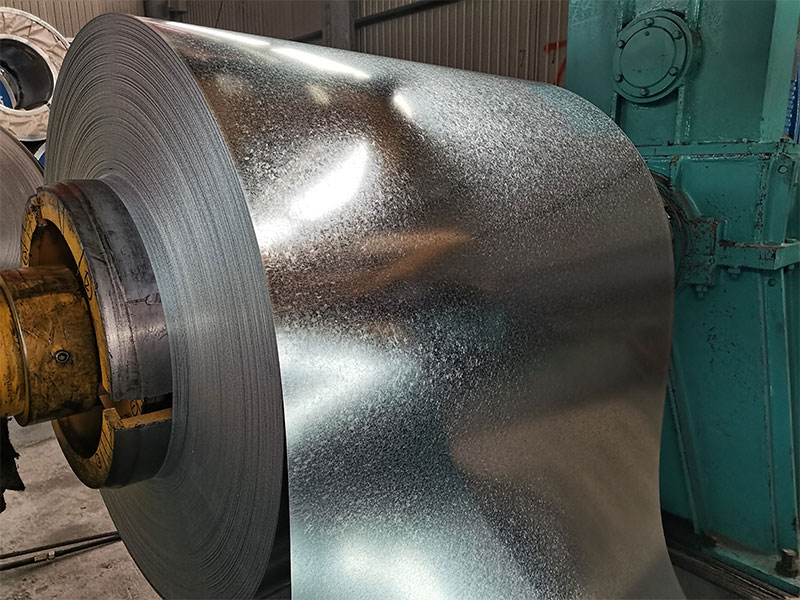
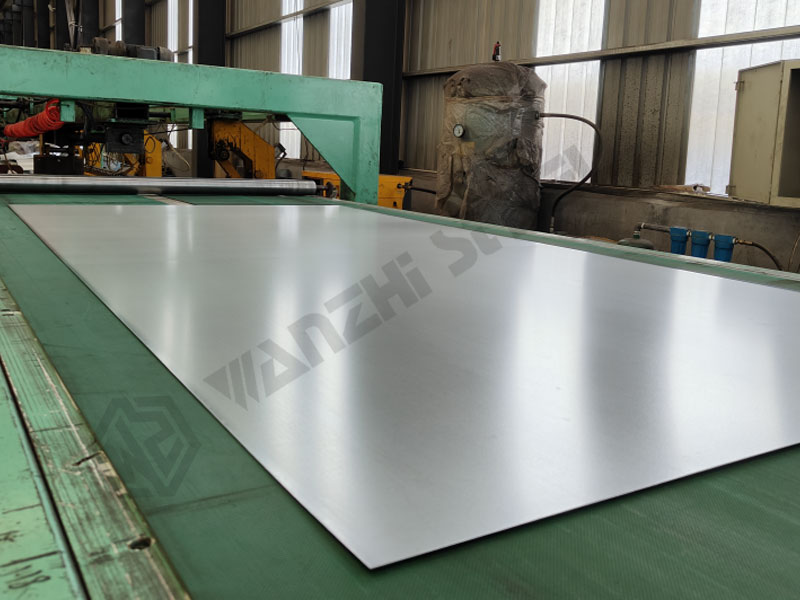
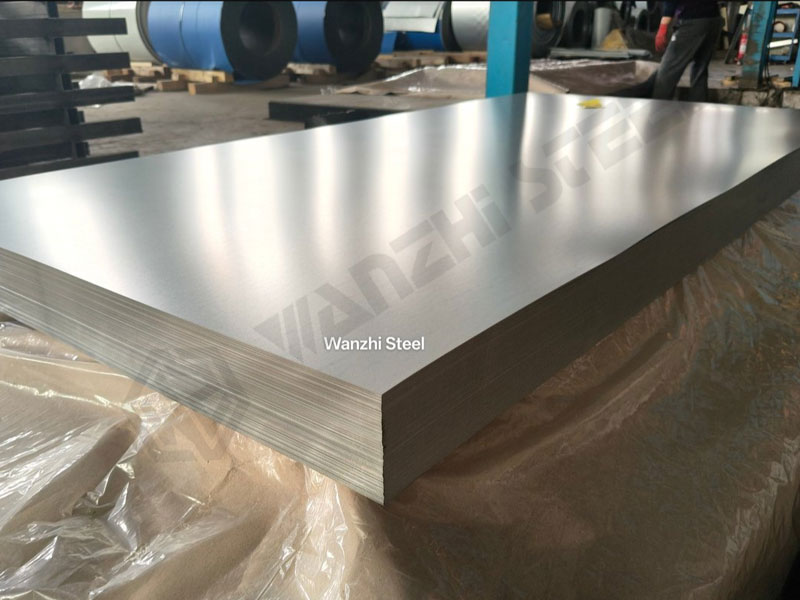
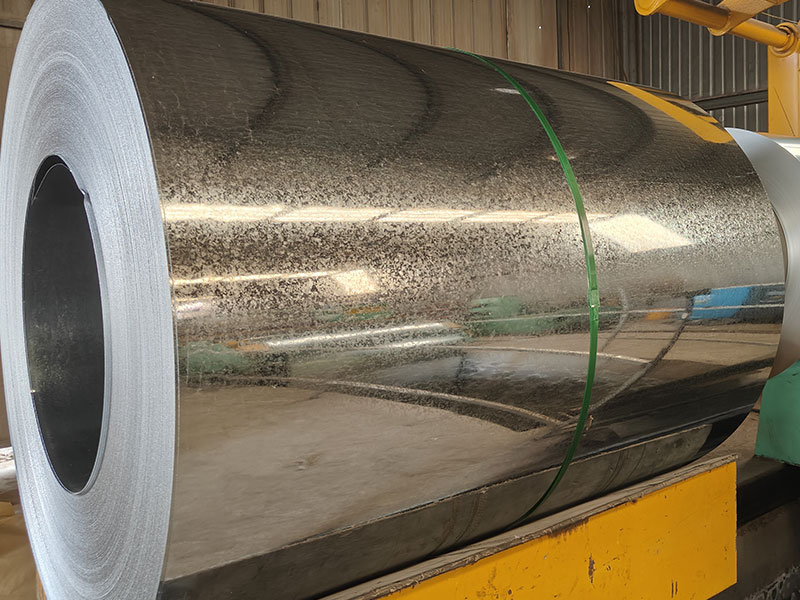
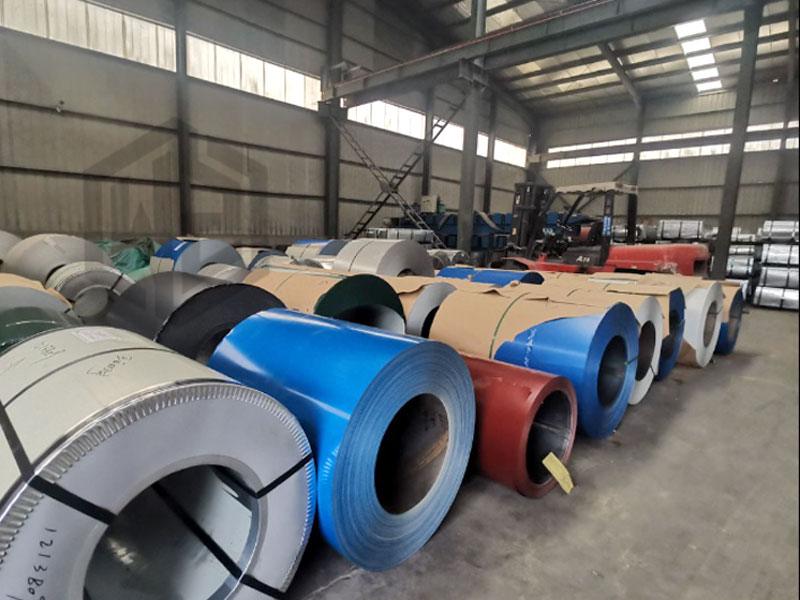
Galvanized steel coil, often called GI coil, is cold-rolled or hot-rolled steel coil coated with zinc through a hot-dip galvanizing process. The zinc coating provides both barrier and sacrificial protection, helping protect the steel substrate from moisture, oxygen, and other corrosive elements. If the coating is scratched and the steel substrate is exposed, the zinc can provide sacrificial protection and help reduce the risk of red rust. Galvanized steel coil offers a good balance of strength, corrosion resistance, workability, availability, and cost-effectiveness.
How Is GI Coil Manufactured?
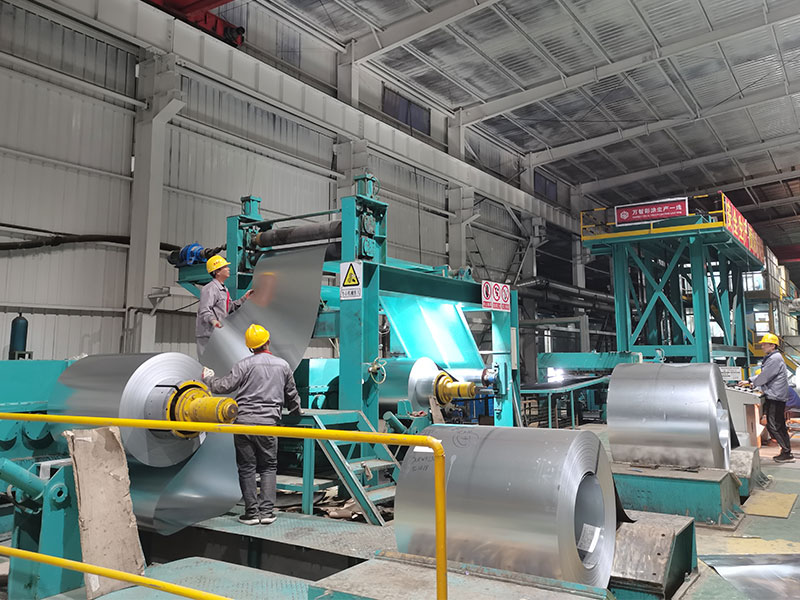
- Uncoiling: The steel strip is uncoiled and prepared for continuous processing.
- Cleaning: The strip is cleaned to remove oil, dirt, and surface oxides.
- Annealing: The steel strip is heated and annealed to achieve the required mechanical properties.
- Hot-Dip Galvanizing: The strip passes through a molten zinc bath, forming a zinc coating on both sides.
- Air Knife Control: Air knives remove excess zinc and control the coating thickness and uniformity.
- Cooling and Surface Treatment: The galvanized strip is cooled and may undergo surface treatment according to the required finish.
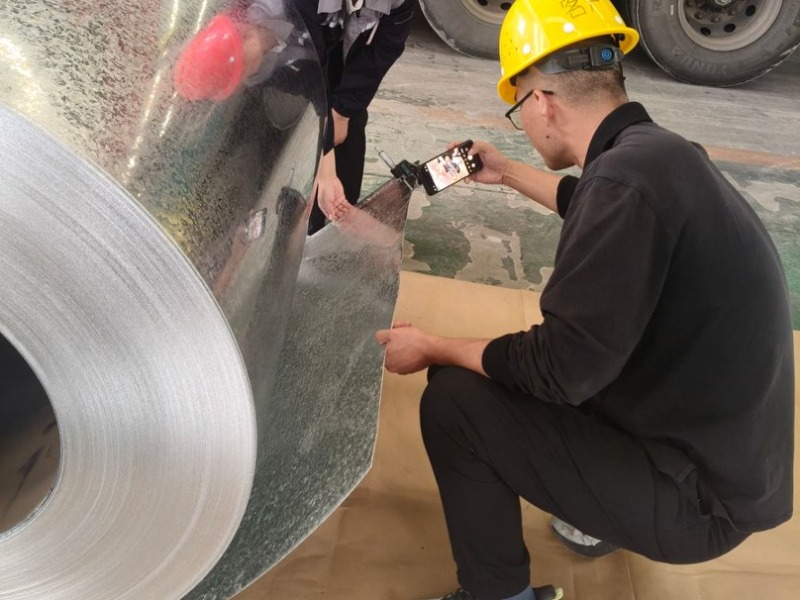
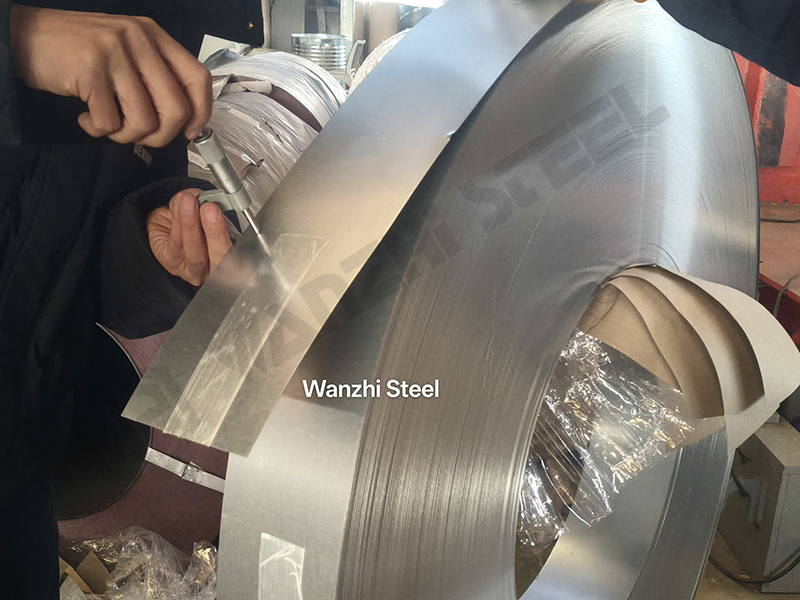
- Inspection and Testing: The finished GI steel is checked for dimensions, zinc coating, surface quality, and mechanical properties.
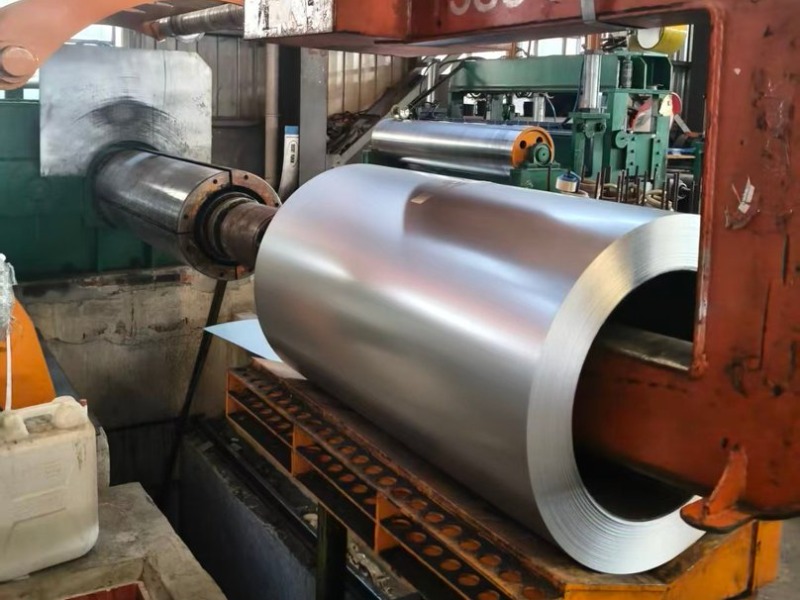
- Recoiling and Packaging: The galvanized strip is recoiled into coils and properly packaged for storage or shipment.
Factors to Consider When Purchasing Galvanized Steel Coil
When purchasing galvanized steel coil, price is only one consideration. Buyers should evaluate the material specification, corrosion protection, processing requirements, and delivery conditions. Thicker steel and heavier zinc coatings generally increase material costs, while over-specification can raise expenses and under-specification may result in insufficient performance. Comparing quotations based on the complete specification helps balance cost and performance.
Steel Grade
The steel grade affects the strength, ductility, and formability of the coil. Common grades include DX51D, DX52D, DX53D, SGCC, SGCH, S250GD, and S350GD. Select the grade according to the required application and processing method. Forming grades are suitable for bending and stamping, while structural grades are used when higher strength is required.
Common Galvanized Steel Grades
| Standard | Common Steel Grades | Typical Grade Category |
| ASTM A653/A653M
|
CS Type A/B/C, FS, DDS, SS Grade 33, 40, 50, 80 | Commercial, forming, drawing, and structural steels |
| EN 10346
|
DX51D, DX52D, DX53D, DX54D, S250GD, S350GD, S420GD, S550GD | Cold forming and structural steels |
| JIS G3302
|
SGCC, SGCH, SGCD1–4, SGC340–570 | Commercial, drawing, and high-strength commercial steels |
| GB/T 2518
|
DX51D, DX52D, DX53D, DX54D, S250GD, S280GD, S350GD, S420GD, S550GD | Cold forming and structural steels |
Thickness and Width
Select the thickness according to the required strength, rigidity, forming method, and product design. GI coils are commonly supplied in thicknesses below 3.0 mm. Thicknesses around 0.3–0.6 mm are widely used for roofing, wall panels, ceilings, and light fabrication. Thicknesses of 0.6–1.5 mm are common for general fabrication, ducts, pipes, and roll forming, while 1.5–3.0 mm is suitable for heavier fabrication and industrial applications.
Common coil widths range from about 600 to 1,500 mm. Narrow widths are useful for slitting and smaller profiles, while 900–1,250 mm widths are widely used for roofing and roll forming. Wider coils can improve material utilization for large panels and downstream processing.
Coating Type
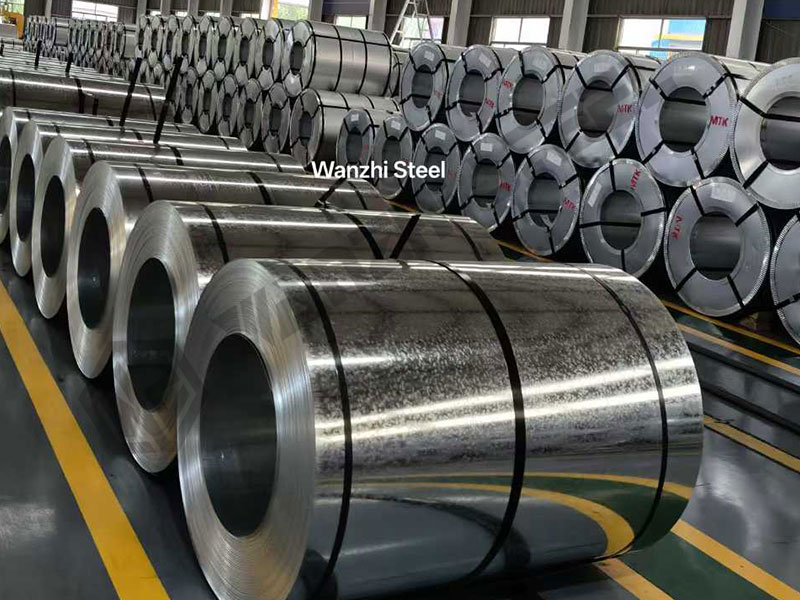
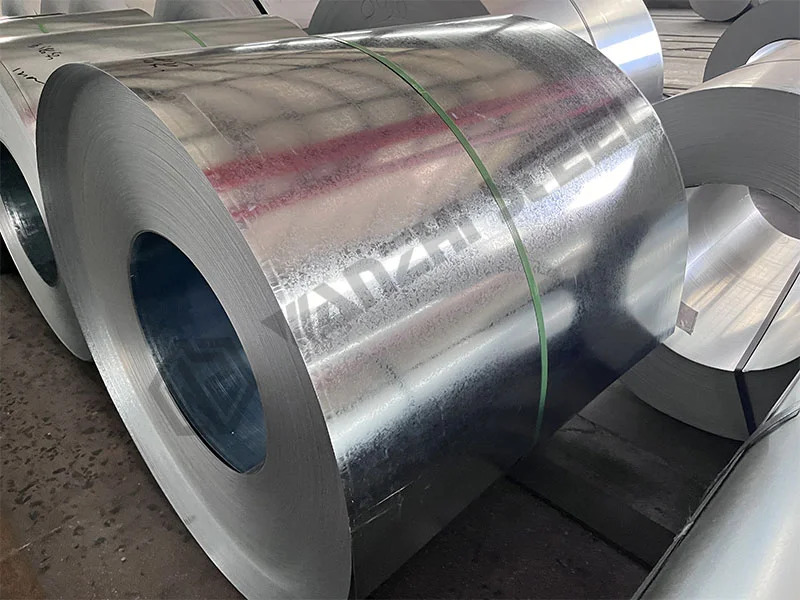
Galvanized steel can be produced by different coating processes.
- Hot-Dip Galvanized (HDG): The steel strip passes through a molten zinc bath to form a zinc coating on the steel surface.
- Electro-Galvanized (EG): Zinc is deposited onto the steel through an electroplating process, generally producing a smoother surface and thinner coating.
The appropriate coating process depends on the required corrosion protection, surface quality, and application.
Zinc Coating Weight
Zinc coating weight is an important factor affecting corrosion protection and cost. Common GI coils are available with zinc coating designations from Z30 to Z350, with common specifications including Z40, Z80, Z120, Z180, and Z275. The Z value indicates the total zinc coating mass on both sides in g/m². In general, a heavier zinc coating provides greater corrosion protection but also increases material cost.
Zinc Coating Weight Guide
Actual zinc coating requirements depend on the service environment, expected service life, applicable standard, and project requirements.
| Zinc Coating | Total Coating Mass | Typical Uses |
| Z30–Z80 | 30–80 g/m² | Indoor and low-corrosion applications |
| Z100–Z140 | 100–140 g/m² | General construction and outdoor use |
| Z150–Z200 | 150–200 g/m² | Outdoor and general industrial applications |
| Z225–Z275 | 225–275 g/m² | Humid, coastal, and higher-corrosion environments |
| Z300–Z350 | 300–350 g/m² | More demanding industrial and corrosive environments |
Surface Finish
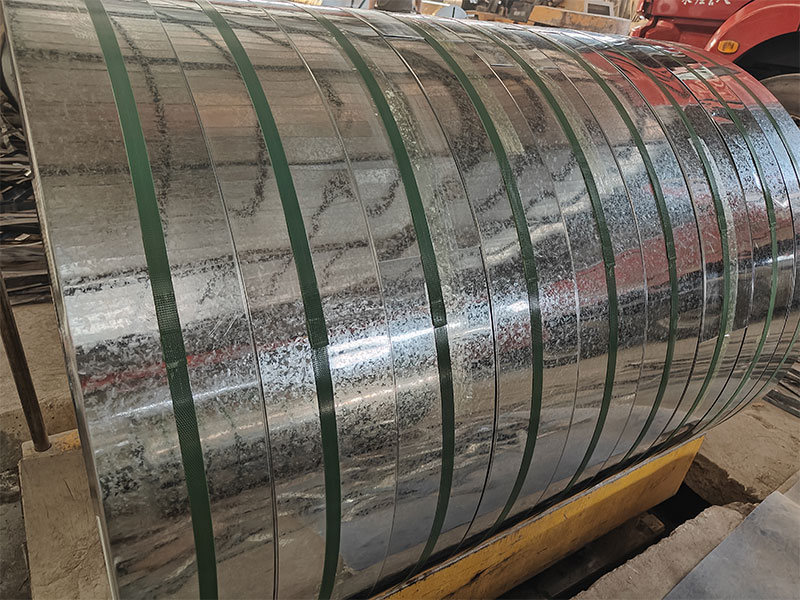
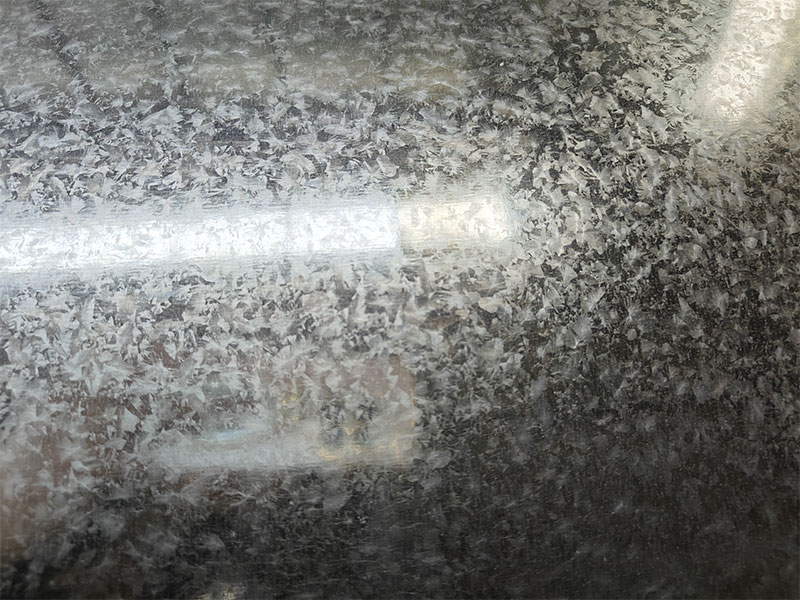
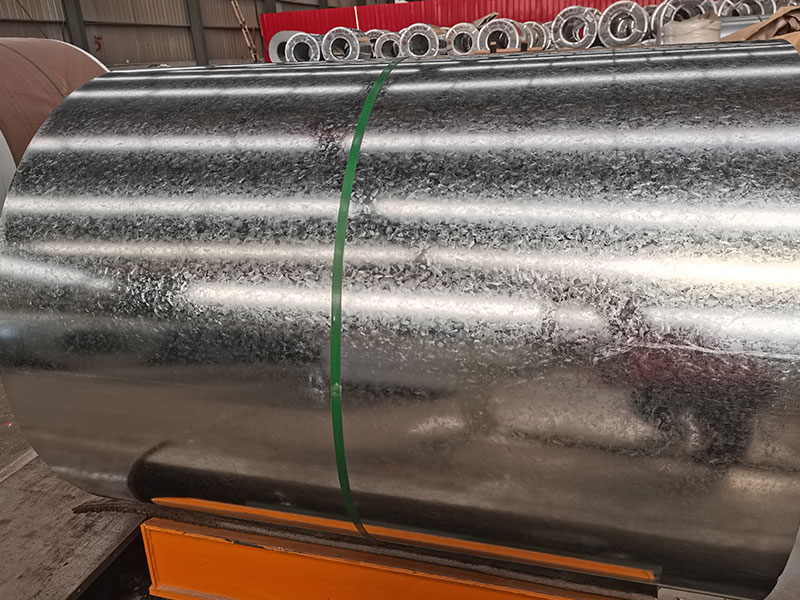
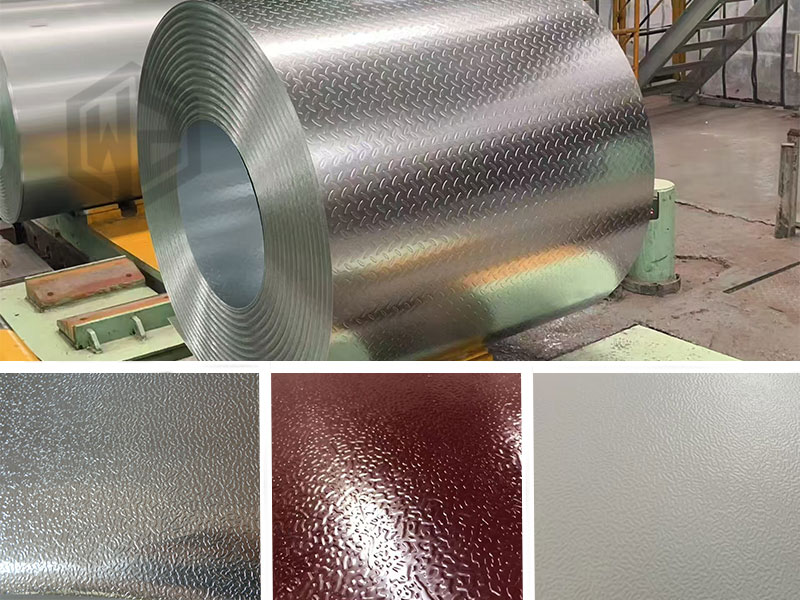
GI coils are mainly available with different spangle appearances:
- Regular Spangle – A visible crystalline pattern formed during hot-dip galvanizing, commonly used for general applications.
- Minimized/Small Spangle – A finer and more uniform surface appearance when a less pronounced spangle is preferred.
- Zero Spangle – A smooth, uniform surface with no visible spangle, often preferred for painting, forming, and applications requiring a consistent appearance.
- Big Spangle – A more pronounced crystalline pattern, selected mainly for specific appearance requirements.
Surface Treatment
Surface treatments such as passivation, oiling, and anti-fingerprint treatment can affect storage stability, processing, and subsequent coating. The required surface condition should be confirmed before ordering, especially when the galvanized coil will be painted, formed, or stored for an extended period.
Fabrication & Formability Needs
Consider the steel grade, thickness, width, and required fabrication process. Formability depends on the steel grade and mechanical properties, while thicker materials generally require higher forming forces. Coil width and thickness are important for roll forming and sheet-metal operations. For welding, use appropriate welding parameters and provide adequate ventilation to control zinc fumes.
Coil Specifications and Packaging
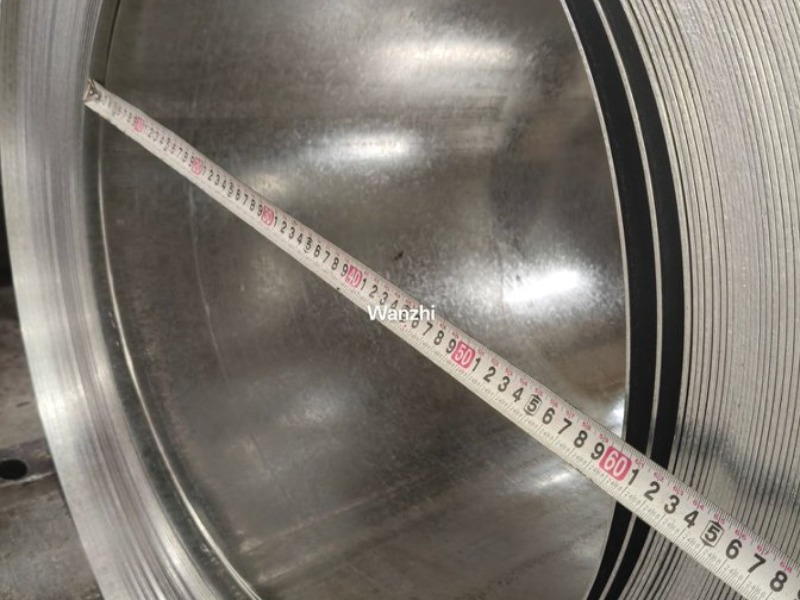
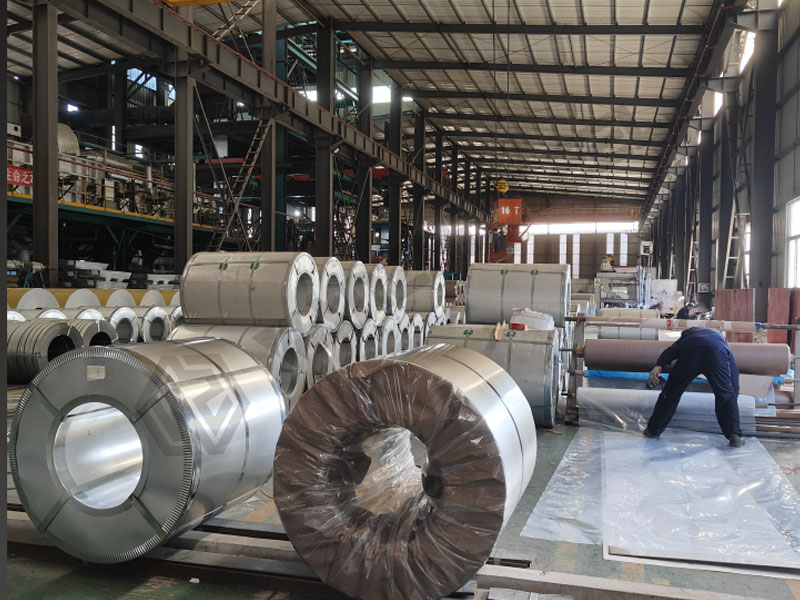
Confirm the coil inner diameter, coil weight, outer diameter, edge protection, and packaging requirements before ordering. These specifications should match the buyer’s handling equipment, transportation conditions, and storage requirements. Proper export packaging helps reduce the risk of moisture and mechanical damage during transportation.
What Are the Main Features and Applications of GI Coil?
Galvanized steel coil offers good corrosion resistance, durability, and processability. The zinc coating helps protect the steel substrate from moisture and corrosion. It can be efficiently slit, cut, formed, and further processed.
Typical Applications
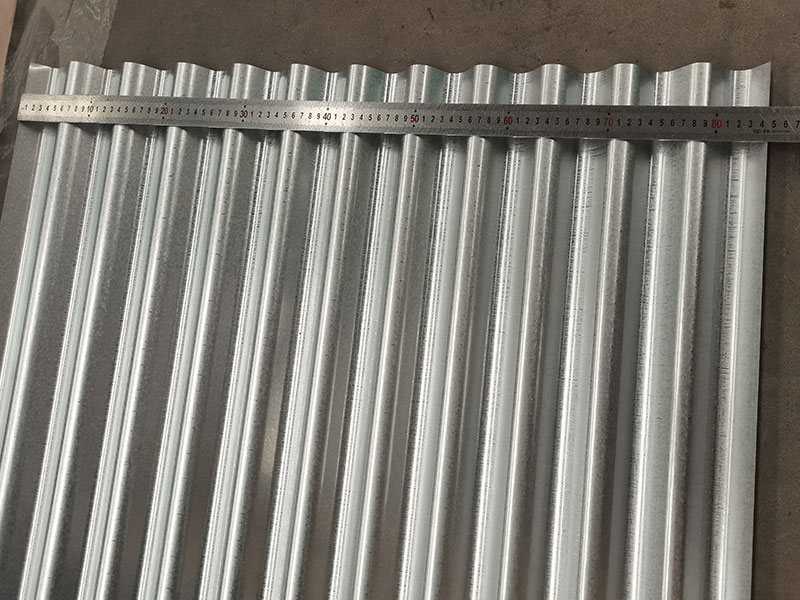
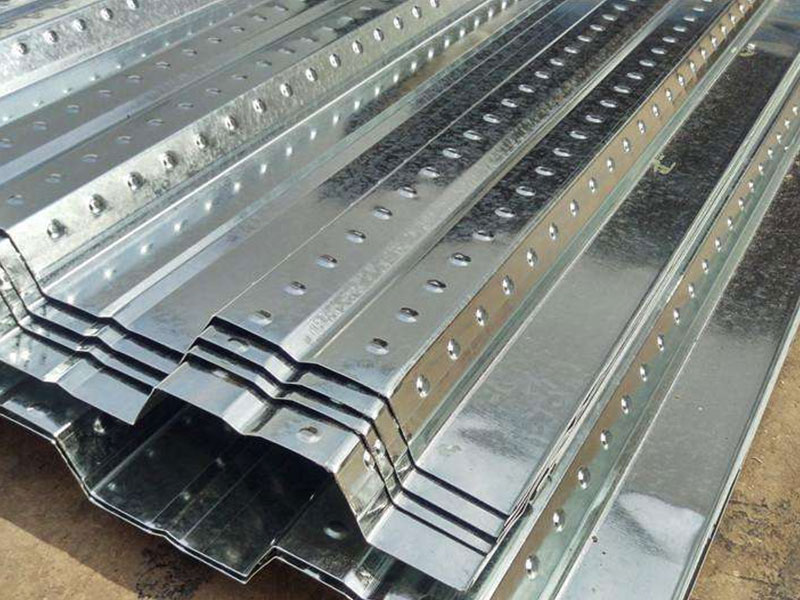
- GI corrugated roofing sheets and wall cladding
- Purlins, studs, and steel framing
- Roll-up doors, garage doors, fences, and ceiling systems
- Ventilation ducts, cable trays, and HVAC components
- Appliance panels and electrical cabinets
- Pipes, containers, shelving, and general fabrication
- Base material for prepainted galvanized steel coil (PPGI)
Common Mistakes When Purchasing Galvanized Steel Coil
- Wrong Steel Grade or Thickness: Match the grade and thickness to the required strength, formability, and end use.
- Unsuitable Zinc Coating: Select the coating weight according to the service environment and expected service life.
- Ignoring Width and Processing Needs: Confirm the coil width and dimensions suit downstream processing.
- Focusing Only on Price: Compare specifications, quality, packaging, and delivery terms, not just the unit price.
- Overlooking Surface and Quality Requirements: Confirm the surface finish, applicable standard, MTC, and mechanical properties before ordering.
- Neglecting Packaging and Supplier Capability: Check export packaging, coil specifications, production capacity, inspection procedures, and delivery capability.
Conclusion
Choosing the right galvanized steel coil is not simply about finding the lowest price. Buyers should match the steel grade, thickness, width, zinc coating, surface finish, and processing requirements to the intended application and service environment. Proper specification selection can reduce material waste and unnecessary costs while helping control maintenance costs over the service life.
Please provide your application, end use, specifications, and quantity. Wanzhi can recommend a suitable GI coil solution and provide a competitive quotation.
FAQ
- What is the difference between GI coil and other coated steel coils?
Galvanized steel coil (GI) has a zinc coating, while GL has an aluminum-zinc alloy coating. PPGI and PPGL are further coated with organic paint for color, appearance, and additional surface protection. The suitable product depends on corrosion exposure, heat resistance, appearance, and processing requirements.
- Is a thicker zinc coating always better?
Not necessarily. A heavier zinc coating generally provides greater corrosion protection but also increases material cost. The coating weight should match the service environment and expected service life.
- Can galvanized steel coil be painted?
Yes. Galvanized steel can be painted after appropriate surface preparation and selection of a compatible coating system. Surface treatment and paint compatibility should be confirmed before painting.
- Which Galvanized Steel Coil Is Best for Roofing Sheets?
The suitable GI coil depends on the climate, expected service life, thickness, zinc coating weight, and forming requirements. For roofing sheets, buyers typically focus on corrosion protection, flatness, surface quality, and forming performance to ensure smooth profiling and reliable service.
- Can Galvanized Steel Be Welded?
Yes. Galvanized steel can be welded with suitable methods and parameters. Buyers should consider weldability, joint quality, and zinc fume control. Proper ventilation is important during welding.
- How Long Does Galvanized Steel Last?
Galvanized steel can typically provide 20–50 years of service, depending on the zinc coating, service environment, exposure conditions, and maintenance. A heavier zinc coating and less corrosive environment can generally extend its service life.
Wanzhi Group is a Chinese coated steel supplier offering GI, GL, PPGI, PPGL, PPAL, ZAM coils, and more. Contact us with your requirements for a free quote and tailored solution.